Brucite — NIR2,126 points · 4000–12500 cm⁻¹
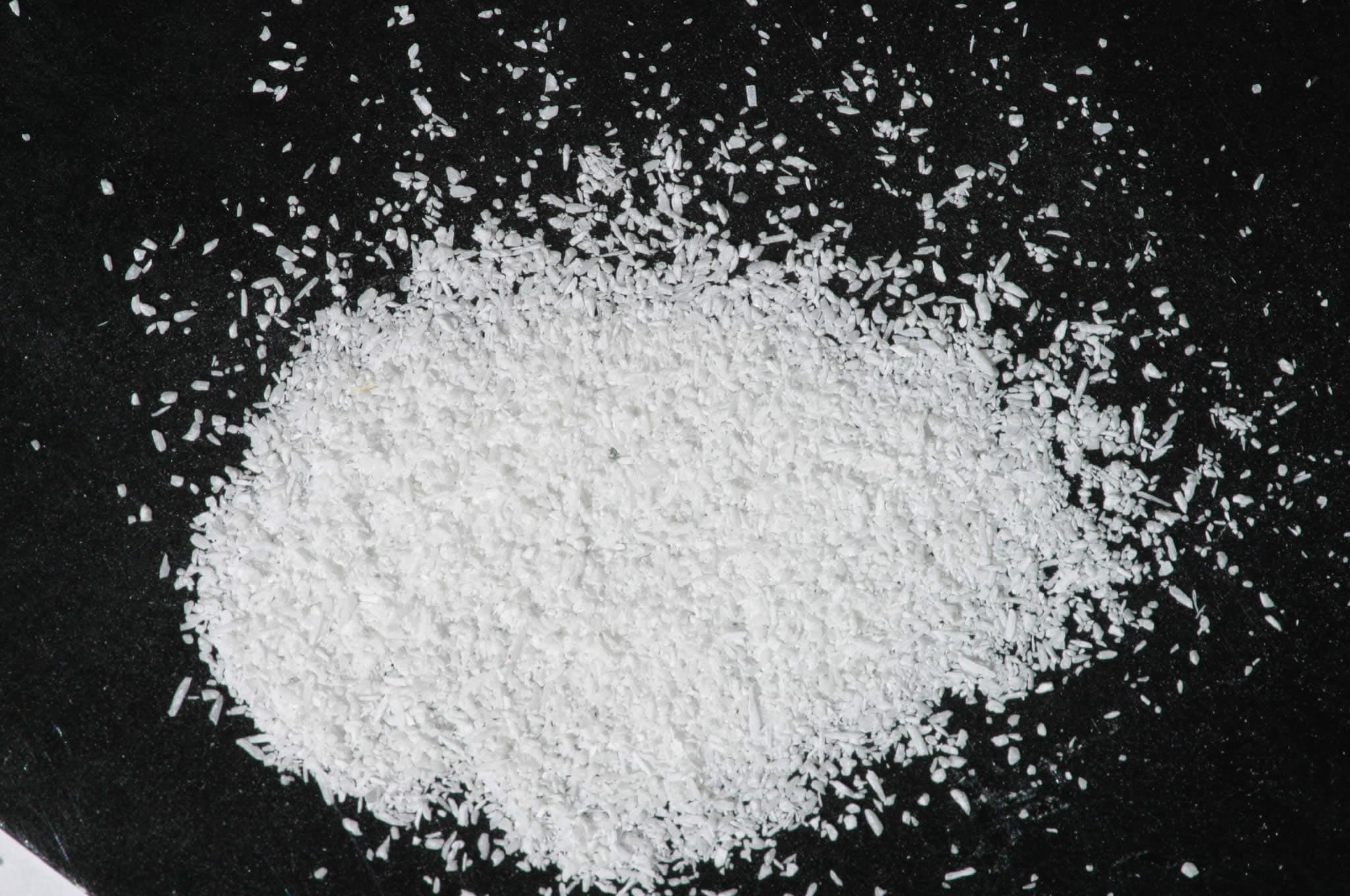
Sample photograph — USGS Spectral Library v7
Spectrum Details
- Modality
- NIR
- Category
- mineral
- Material Type
- Hydroxide
- Sample ID
- HS247.1B, HS247.2B, HS247.3B, HS247.4B
- Collection Locality
- Lodi, Nevada
- Spectral Purity
- 1c2_3_4_ # Brucite HS247.1B # 1= 0.2-3, 2= 1.5-6, 3= 6-25, 4= 20-150 microns SPECTRAL_PURITY: 1c2_3_4_ # Brucite HS247.2B # 1= 0.2-3, 2= 1.5-6, 3= 6-25, 4= 20-150 microns SPECTRAL_PURITY: 1c2c3c4c # Brucite HS247.3B # 1= 0.2-3, 2= 1.5-6, 3= 6-25, 4= 20-150 microns SPECTRAL_PURITY: 1c2_3_4_ # Brucite HS247.4B # 1= 0.2-3, 2= 1.5-6, 3= 6-25, 4= 20-150 microns
- Composition / XRD
- None # XRF, EPMA, ICP(Trace), WChem
- Sample Description
- "Brucite, Mg(OH)2, is a hydroxide typically found associated with serpentine, dolomite, magnesite and chromite as a decomposition product of magnesium silicates, especially serpentine. The brucite spectrum displays the best resolved vibrational bands in the present series, and interpretation of its spectrum has received considerable attention in the literature, The extremely sharp bands at 0.96µm and near 1.5µm are clearly due to vibrations of the hydroxyl group. The sharp band near 0.74µm likewise must be an overtone or combination tone of the OH group, and it occurs at the shortest wavelength of any vibrational band we have so far seen in this series. The multiplicity of bands in the brucite spectrum (as distinct from the single features in some of the micas, and evidenced by the sharp, well-resolved group of features near 1.4µm) have been variously interpreted as combinations of the fundamental stretching vibration with librational motions of the hydroxyl ions (Hexter, 1958); as combinations of the lattice vibrational modes with the OH stretching vibrations (Buchanan and others, 1962); and as caused by the close proximity of the hydroxyl ions in the brucite lattice, which causes the hydroxyl groups to have specific but different orientations and force constants (Boutin and Basset, 1963). The strong broad bands at longer wavelengths (2.32 and 2.49µm) have been studied using oriented crystals and polarized light (Mara and Sutherland, 1953). They also subjected the brucite to deuteration which resulted in appropriate wavelength shifts in the spectrum, indicating that these bands are indeed due to true OH vibrations." Hunt, G.R., J.W. Salisbury, and C.J. Lenhoff, 1971, Visible and near-infrared spectra of minerals and rocks: III. Oxides and hydroxides. Modern Geology, vol. 2, pp 195-205. Grain size fractions are indicated by the extension after the sample number: .1B = IMAGE_OF_SAMPLE:
- XRD Analysis
- Brucite plus medium amount dolomite plus small amount of other. (Norma Vergo) HCL treatment shows ~8% carbonate. Spectral purity of narrow feature: spectrally pure according to analysis in: Clark, R.N., King, T.V.V., Klejwa, M., Swayze, G.A., and Vergo, N., 1990, High spectral resolution reflectance spectroscopy of minerals: Journal of Geophysical Research, v. 95, no. 8B, p 12,653-12,680.
- X Units
- cm⁻¹
- Y Units
- Absorbance
- Data Points
- 2,126
Download
Attribution
USGS Spectral Library Version 7, U.S. Geological Survey
License: Public Domain
DOI: 10.3133/ds1035Analyze in Workbench
Open this spectrum in the SpectralBench workbench for advanced analysis, peak detection, and comparison.
Open Workbench