Chabazite+Thom+Wair — FTIR1,801 points · 400–4000 cm⁻¹
Spectrum Details
- Modality
- FTIR
- Category
- soil
- Material Type
- Intimate
- Sample ID
- HS193
- Collection Locality
- Colorado
- Spectral Purity
- 1b2b3b4_ # 1= 0.2-3, 2= 1.5-6, 3= 6-25, 4= 20-150 microns
- Composition / XRD
- None # XRF, EPMA, ICP(Trace), WChem
- Sample Description
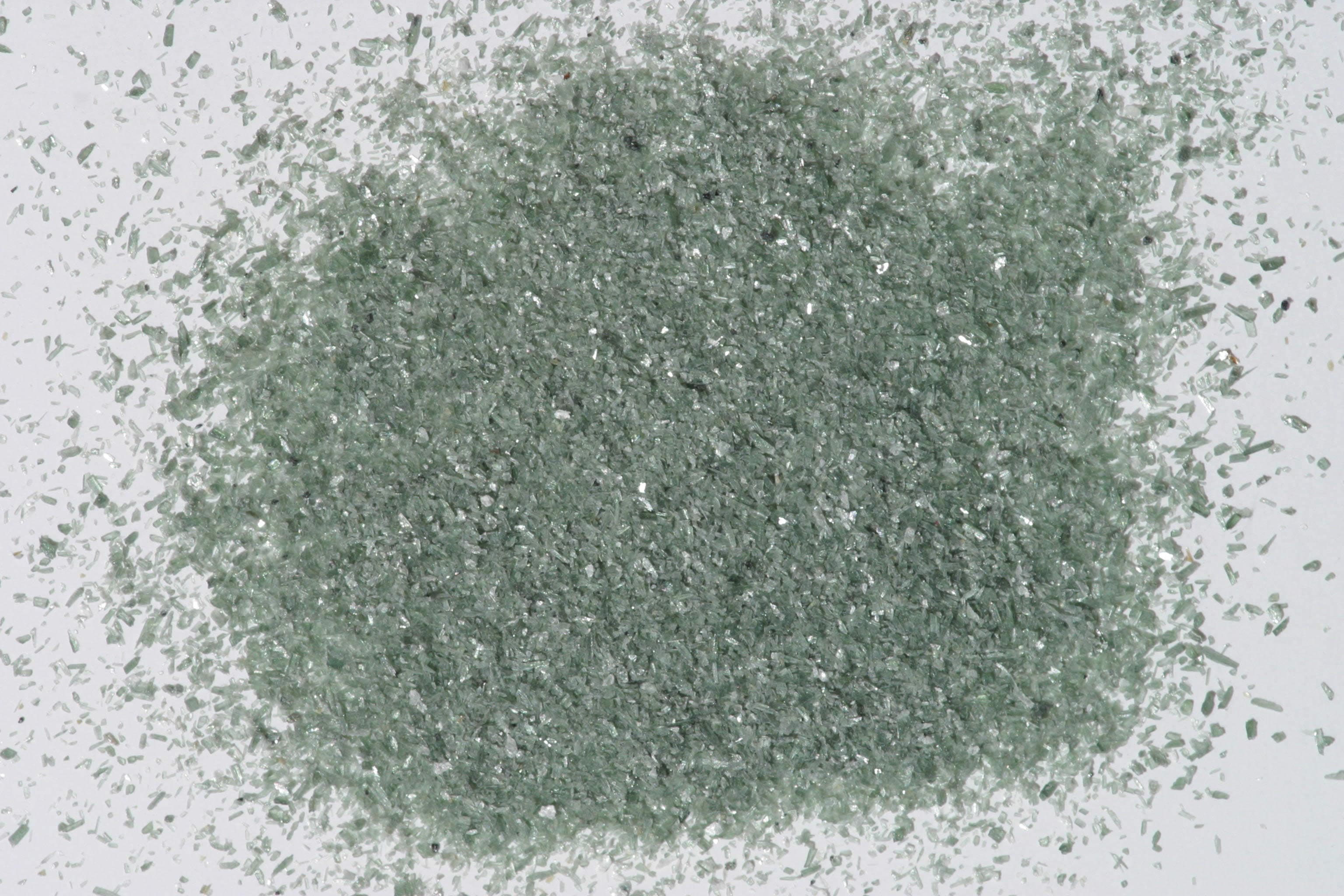
- Chabazite is usually found in rhombohedral crystals, with nearly cubic angles. The ideal composition listed in the FORMULA field often has considerable replacement of Ca by Na and K as well as (Na,K)Si for CaAl. The structure of chabazite consists of an Al-Si-O framework with large cage like openings bounded by rings of tetrahedra. The cages are connected to each other by channels which allow diffusion of molecules of less than ~3.9 Angstroms. The bands seen in its near-infrared spectrum are typical of large quantities of molecular water. See: Hunt, G.R., J.W. Salisbury, 1970, Visible and near-infrared spectra of minerals and rocks: I. Silicate minerals. Modern Geology, v. 1, p. 283-300.
- XRD Analysis
- 40 kV - 30 mA, 6.5-9.5 keV File: chab193.out, -.mdi; chabz193.out, -.mdi References: JCPDS # 34-137, 35-498, 42-1451 Found: Chabazite, thomasite (thomsonite?), wairaikite in sub equal proportions Comment: Reflections are sharp and strong, suggesting good crystallinity and compositional homogeneity. Many peak overlaps made interpretation of the pattern very difficult. Consideration of the relative intensities of chabazite and thomasite led to the realization that some sharp peak had an intensity contribution from a third phase, which turned out to be wairaikite. J.S.Huebner, J. Pickrell, T. Schaefer, written communication(USGS 1994)
- X Units
- cm⁻¹
- Y Units
- Absorbance
- Data Points
- 1,801
Download
Attribution
USGS Spectral Library Version 7, U.S. Geological Survey
License: Public Domain
DOI: 10.3133/ds1035Analyze in Workbench
Open this spectrum in the SpectralBench workbench for advanced analysis, peak detection, and comparison.
Open Workbench