Chalcopyrite — FTIR1,801 points · 400–4000 cm⁻¹
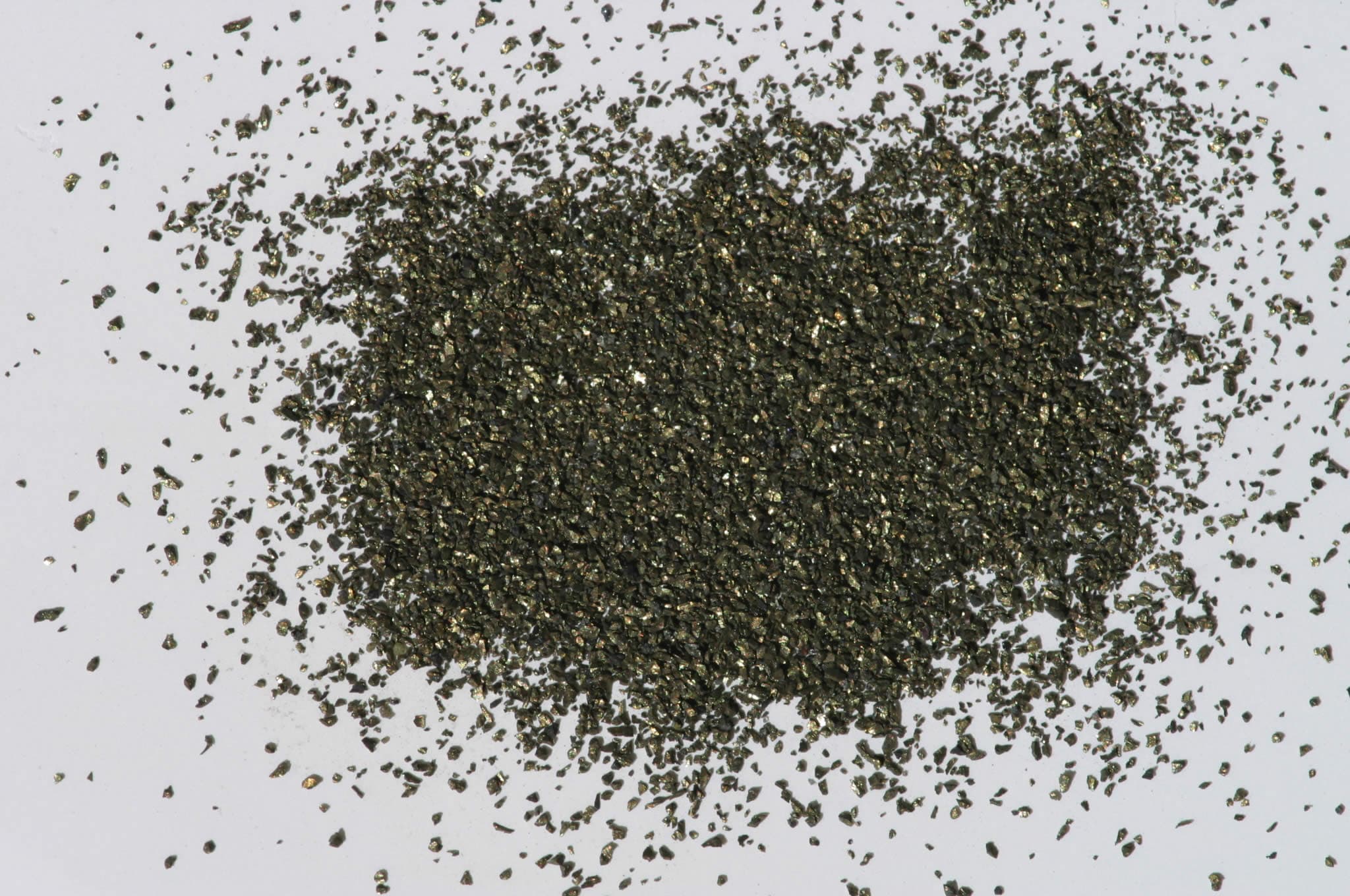
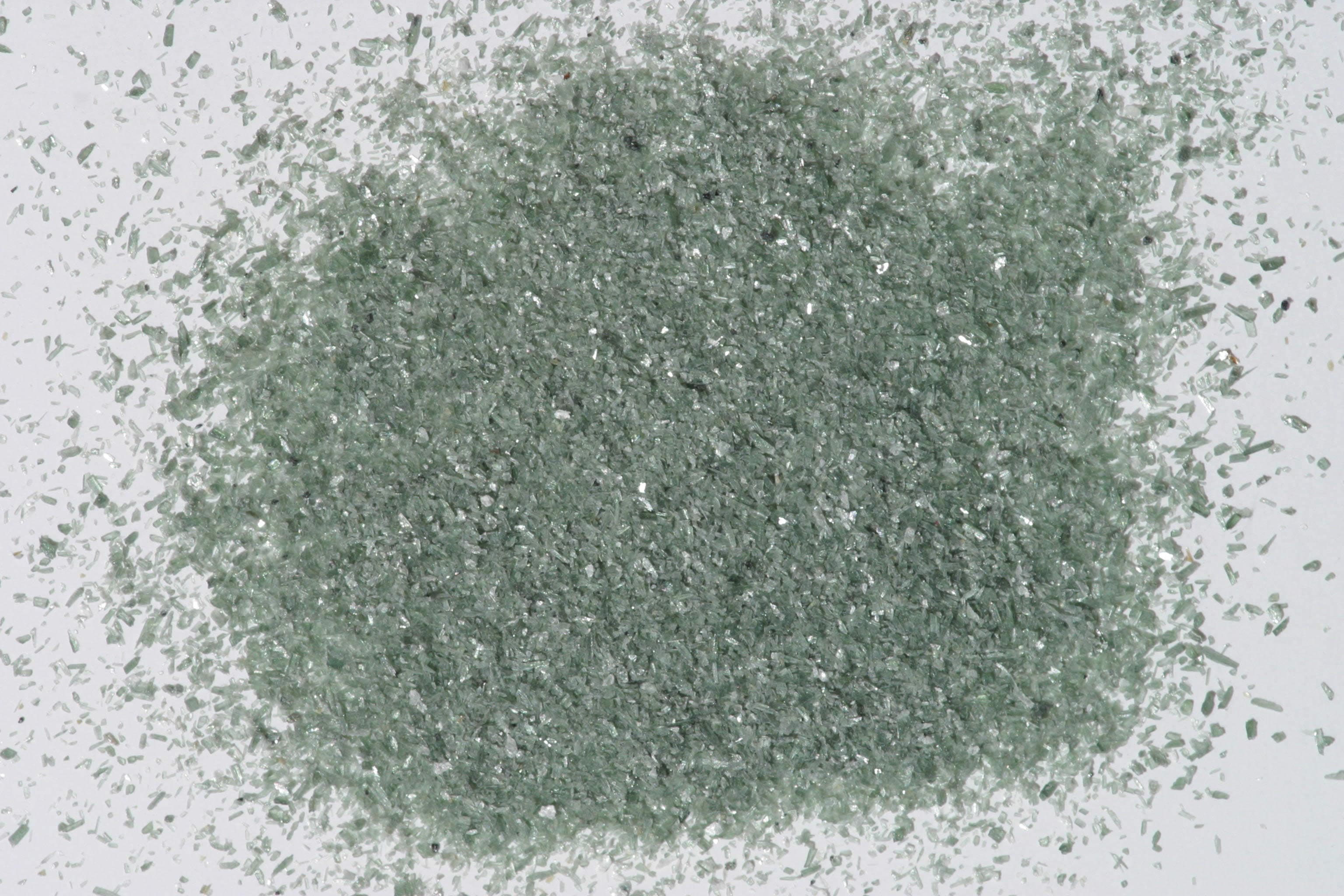
Sample photograph — USGS Spectral Library v7
Spectrum Details
- Modality
- FTIR
- Category
- mineral
- Material Type
- Sulfide
- Sample ID
- HS431.1B, HS431.2B, HS431.3B, HS431.4B
- Collection Locality
- Quebec
- Spectral Purity
- 1b2_3_4_ # Chalcopyrite HS431.1B # 1= 0.2-3, 2= 1.5-6, 3= 6-25, 4= 20-150 microns SPECTRAL_PURITY: 1b2_3_4_ # Chalcopyrite HS431.2B # 1= 0.2-3, 2= 1.5-6, 3= 6-25, 4= 20-150 microns SPECTRAL_PURITY: 1b2b3c4_ # Chalcopyrite HS431.3B # 1= 0.2-3, 2= 1.5-6, 3= 6-25, 4= 20-150 microns SPECTRAL_PURITY: 1b2_3_4_ # Chalcopyrite HS431.4B # 1= 0.2-3, 2= 1.5-6, 3= 6-25, 4= 20-150 microns
- Composition / XRD
- None # XRF, EPMA, ICP(Trace), WChem
- Sample Description
- Forms series with Eskebornite. Spectra for this sample were originally published in: Hunt, G.R., J.W. Salisbury, and C.J. Lenhoff, 1971, Visible and near-infrared spectra of minerals and rocks: IV. Sulfides and sulfates Modern Geology, v. 3, p. 1-14. With the note: "It exhibits typical opaque behavior, decreasing in reflectivity as its particle size is reduced. It is not, however, spectrally featureless. A fall-off in the reflectivity toward the blue, together with a weak band near 0.9µm, results in the characteristic brass-yellow color of this mineral. Both spectral features are due to iron, which is present in chalcopyrite in the trivalent state (Deer and others, 1962). The copper also makes a contribution to the feature near 0.9µm. This sample is contaminated with approximately 10% pyrrhotite, which has no appreciable effect on the spectrum." Grain size fractions are indicated by the extension after the sample number: .1B = IMAGE_OF_SAMPLE:
- XRD Analysis
- 40 kV - 30 mA, 7.3-9.5 keV File: chpyr431_mdi, *.out (smear mount on quartz plate) References: JCPDS #37-471, #5-566; Huebner's reference patterns Found: Chalcopyrite, minor sphalerite Comment: Moderately sharp, symmetrical peaks suggest moderate crystallinity and compositional heterogeneity. Sphalerite lattice spacing's consistent with ZnS composition (Fe-poor sphalerite). J.S. Huebner, J. Pickrell, and T. Schaefer, 1994, written communication.
- X Units
- cm⁻¹
- Y Units
- Absorbance
- Data Points
- 1,801
Download
Attribution
USGS Spectral Library Version 7, U.S. Geological Survey
License: Public Domain
DOI: 10.3133/ds1035Analyze in Workbench
Open this spectrum in the SpectralBench workbench for advanced analysis, peak detection, and comparison.
Open Workbench