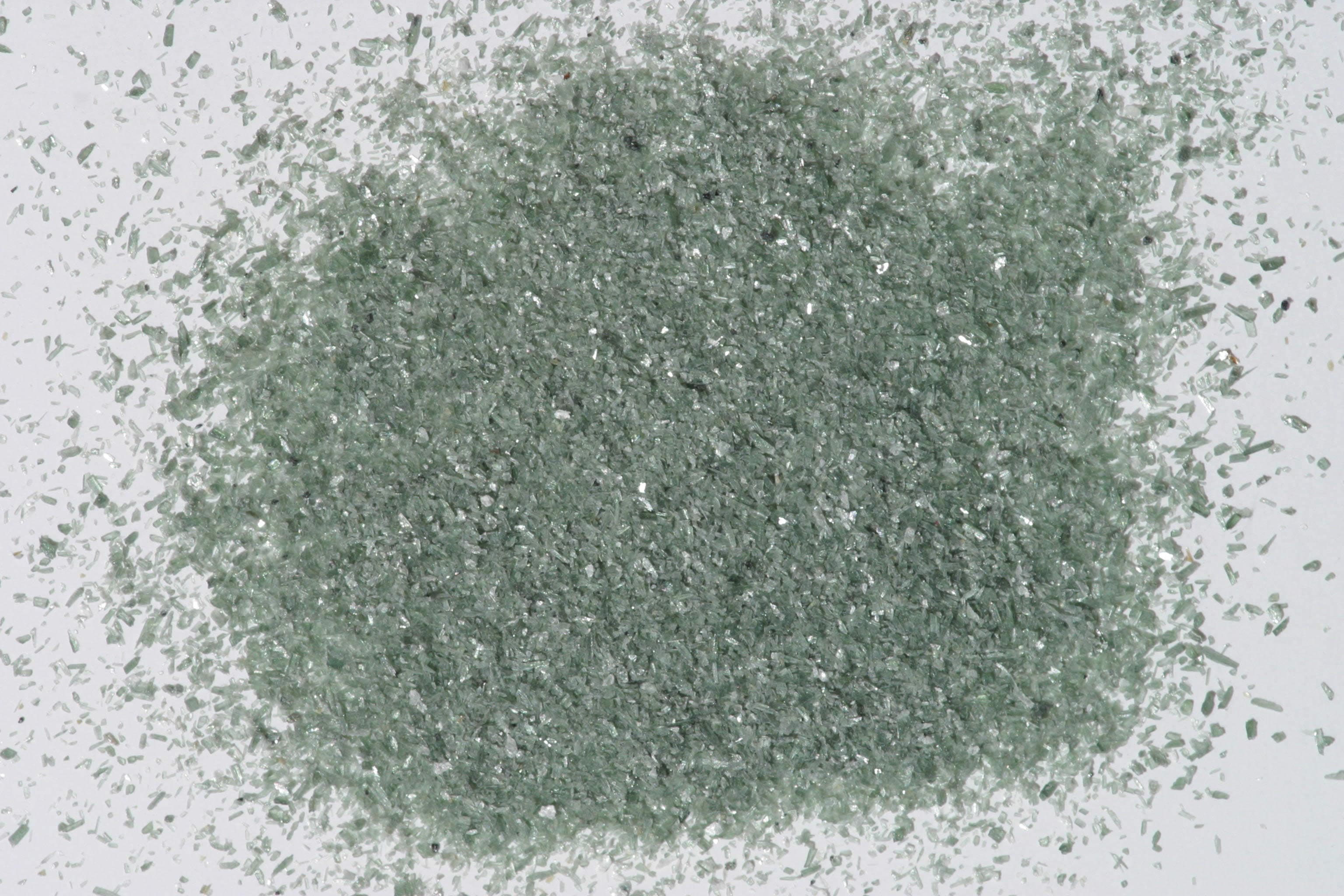
Chrysocolla — FTIR1,801 points · 400–4000 cm⁻¹

Sample photograph — USGS Spectral Library v7
Spectrum Details
- Modality
- FTIR
- Category
- mineral
- Material Type
- Phyllosilicate
- Sample ID
- HS297.1B, HS297.2B, HS297.3B, HS297.4B
- Collection Locality
- Miami, AZ
- Spectral Purity
- 1b2_3_4_ # Chrysocolla HS297.1B # 1= 0.2-3, 2= 1.5-6, 3= 6-25, 4= 20-150 microns SPECTRAL_PURITY: 1b2_3_4_ # Chrysocolla HS297.2B # 1= 0.2-3, 2= 1.5-6, 3= 6-25, 4= 20-150 microns SPECTRAL_PURITY: 1b2b3c4b # Chrysocolla HS297.3B # 1= 0.2-3, 2= 1.5-6, 3= 6-25, 4= 20-150 microns SPECTRAL_PURITY: 1b2_3_4_ # Chrysocolla HS297.4B # 1= 0.2-3, 2= 1.5-6, 3= 6-25, 4= 20-150 microns
- Composition / XRD
- None # XRF, EPMA, ICP(Trace), WChem
- Sample Description
- Chrysocolla is a hydrogel or gelatinous precipitate. "C-5 Chrysocolla 297B--Miami, Ariz. CuSi03nH20: Chrysocolla is a secondary mineral occurring in the oxidized zone of copper veins. The spectrum is dominated by the intense Cu^2+ absorption near 0.75 µ, which together with the fall off in reflectivity to the blue, produces a reflectivity maximum near 0.5 µ and the blue green color of the mineral. Constitutional water produces the very intense 1.42 µ and 1.92 µ bands as well as the 2.23 µ feature." Hunt, G.R., J.W. Salisbury, and C.J. Lenhoff, 1973, Visible and near-infrared spectra of minerals and rocks: VI. Additional silicates. Modern Geology, v. 4, p. 85-106. Grain size fractions are indicated by the extension after the sample number: .1B = IMAGE_OF_SAMPLE:
- XRD Analysis
- Quartz - significant component Chrysocolla - possible component Note: Except for quartz this sample is amorphous. Chrysocolla is amorphous, therefore XRD is not a definitive test for chrysocolla. Konnert, Judith and Marta Flohr, 1992, unpublished data, USGS Reston, VA.
- X Units
- cm⁻¹
- Y Units
- Absorbance
- Data Points
- 1,801
Download
Attribution
USGS Spectral Library Version 7, U.S. Geological Survey
License: Public Domain
DOI: 10.3133/ds1035Analyze in Workbench
Open this spectrum in the SpectralBench workbench for advanced analysis, peak detection, and comparison.
Open Workbench