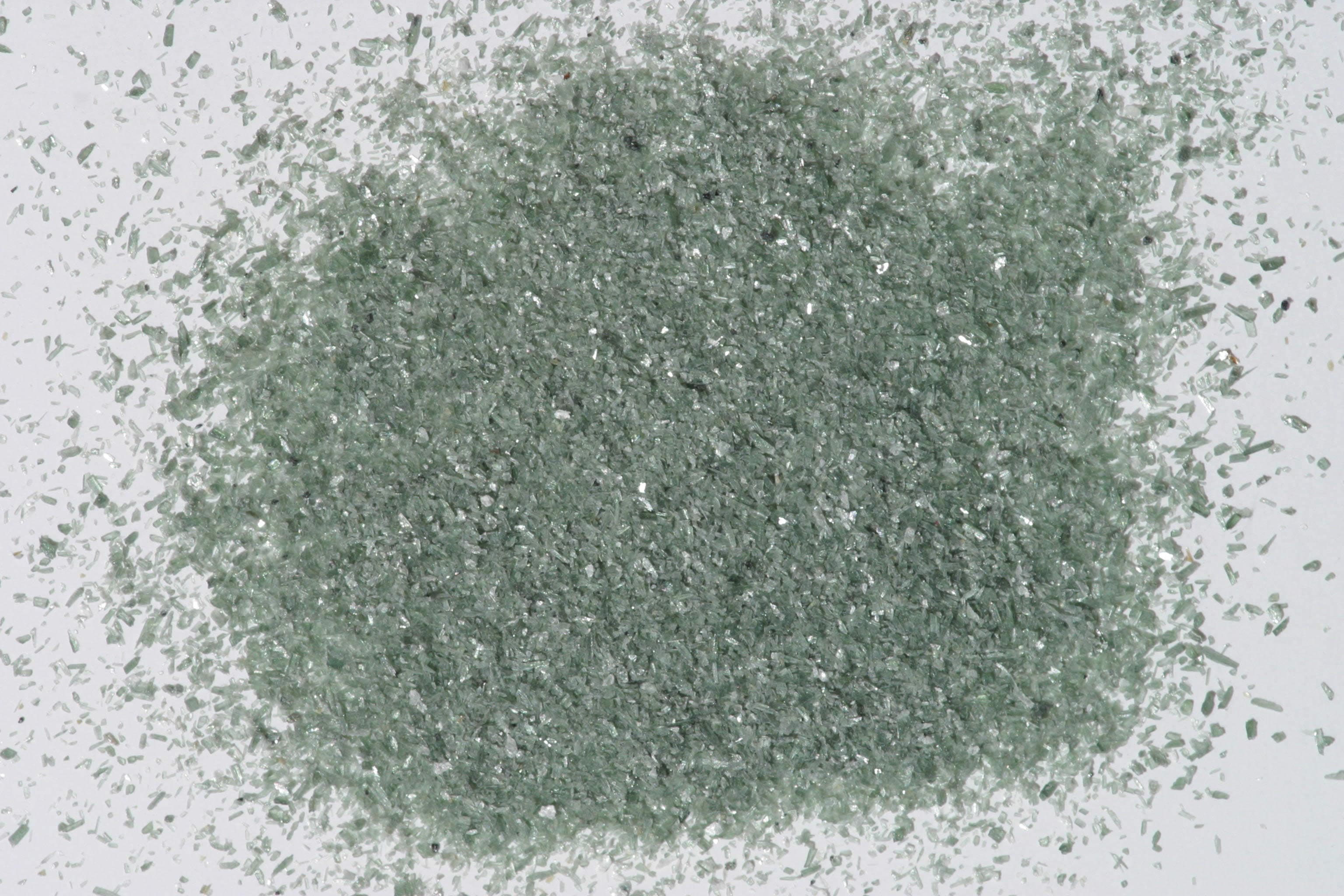
Cummingtonite — FTIR1,801 points · 400–4000 cm⁻¹
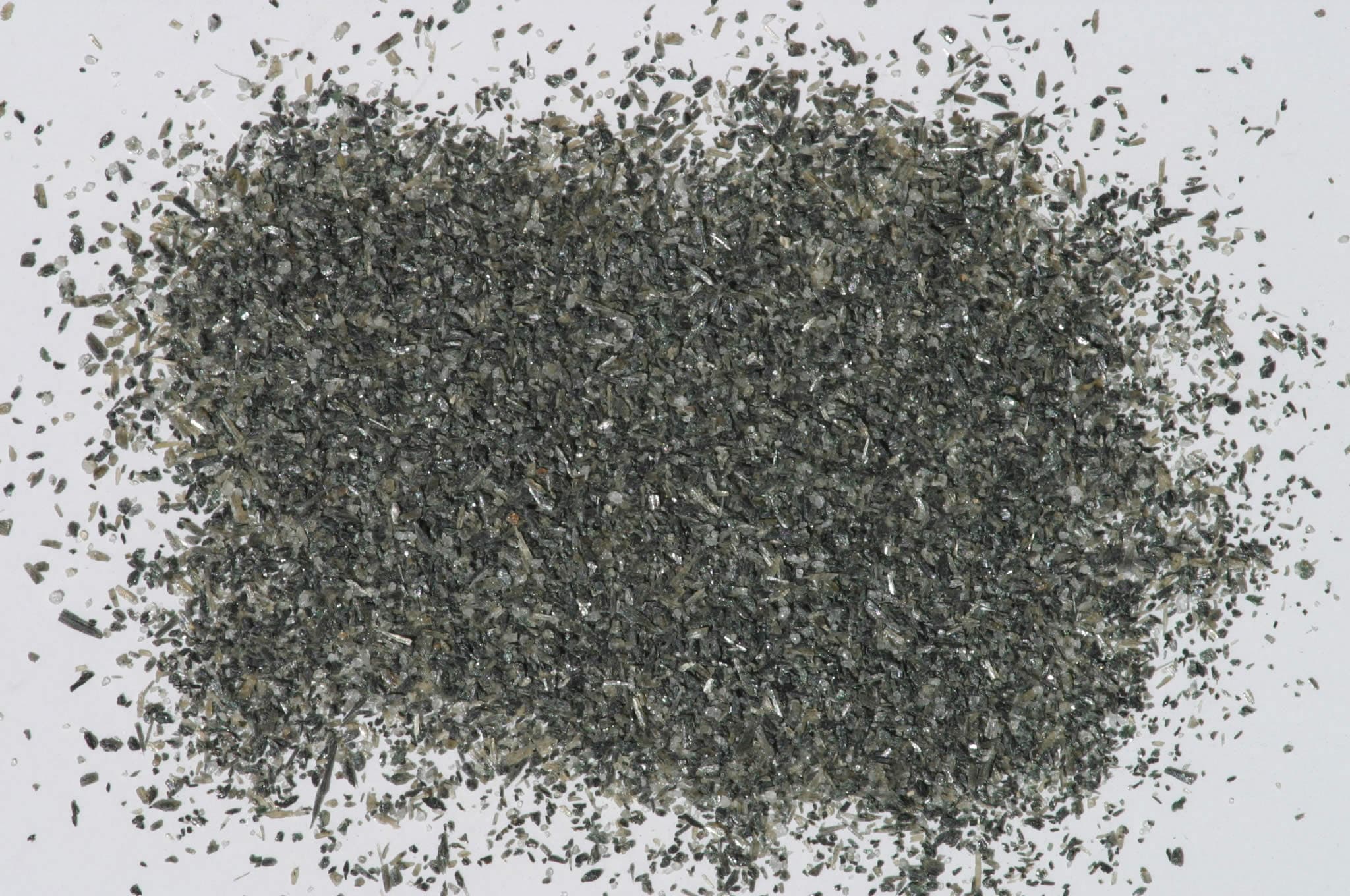
Sample photograph — USGS Spectral Library v7
Spectrum Details
- Modality
- FTIR
- Category
- mineral
- Material Type
- Inosilicate
- Sample ID
- HS294.1B, HS294.2B, HS294.3B, HS294.4B, HS294.6
- Collection Locality
- Lead, SD
- Spectral Purity
- 1c2_3_4_ # Cummingtonite HS294.1B # 1= 0.2-3, 2= 1.5-6, 3= 6-25, 4= 20-150 microns SPECTRAL_PURITY: 1c2_3_4_ # Cummingtonite HS294.2B # 1= 0.2-3, 2= 1.5-6, 3= 6-25, 4= 20-150 microns SPECTRAL_PURITY: 1c2c3c4c # Cummingtonite HS294.3B # 1= 0.2-3, 2= 1.5-6, 3= 6-25, 4= 20-150 microns SPECTRAL_PURITY: 1c2_3_4_ # Cummingtonite HS294.4B # 1= 0.2-3, 2= 1.5-6, 3= 6-25, 4= 20-150 microns SPECTRAL_PURITY: 1c2_3_4_ # Cummingtonite HS294.6 # 1= 0.2-3, 2= 1.5-6, 3= 6-25, 4= 20-150 microns
- Composition / XRD
- None # XRF, EPMA, ICP(Trace), WChem
- Sample Description
- Forms series with Magnesiocummingtonite and Grunerite. "I-13 Cummingtonite 294B--Lead, S. Dakota. (Mg, Fe^2+)5(Si8O22)(OH)2: This amphibole has the same composition as anthophyllite, but is monoclinic rather than orthorhombic in crystal form. Its spectrum is a relatively smooth curve in which there is no evidence of hydroxyl bands, but in which the main feature is a broad ferrous iron band near 1.0µ. The lack of hydroxyl bands in what appears to be a rather pure amphibole in hand specimen is something that we cannot explain. Reflectivities I through IV are 40%, 24%, 12%, and 8% at 0.75µ, and 32%, 15%, 6%, and 4% at 1.0µ. The sample is a dark greenish gray. The low reflectivities are a function of this sample darkness, not of contamination with opaques." Hunt, G.R., J.W. Salisbury, and C.J. Lenhoff, 1973, Visible and near-infrared spectra of minerals and rocks: VI. Additional silicates. Modern Geology, v. 4, p. 85-106. Grain size fractions are indicated by the extension after the sample number: .1B = IMAGE_OF_SAMPLE:
- XRD Analysis
- Cummingtonite + quartz + biotite + chlorite + others (Norma Vergo)
- X Units
- cm⁻¹
- Y Units
- Absorbance
- Data Points
- 1,801
Download
Attribution
USGS Spectral Library Version 7, U.S. Geological Survey
License: Public Domain
DOI: 10.3133/ds1035Analyze in Workbench
Open this spectrum in the SpectralBench workbench for advanced analysis, peak detection, and comparison.
Open Workbench