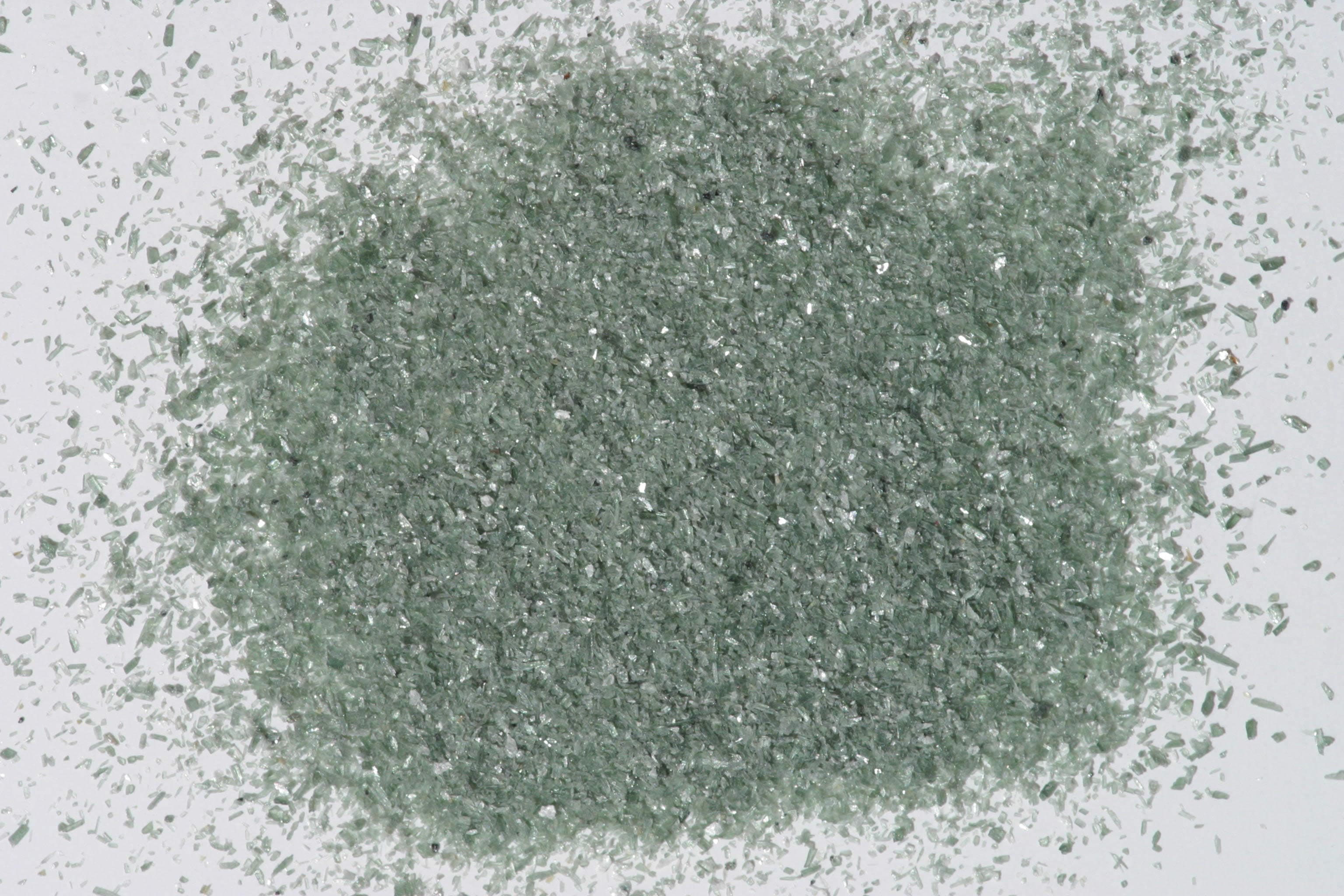
Halite — FTIR1,801 points · 400–4000 cm⁻¹
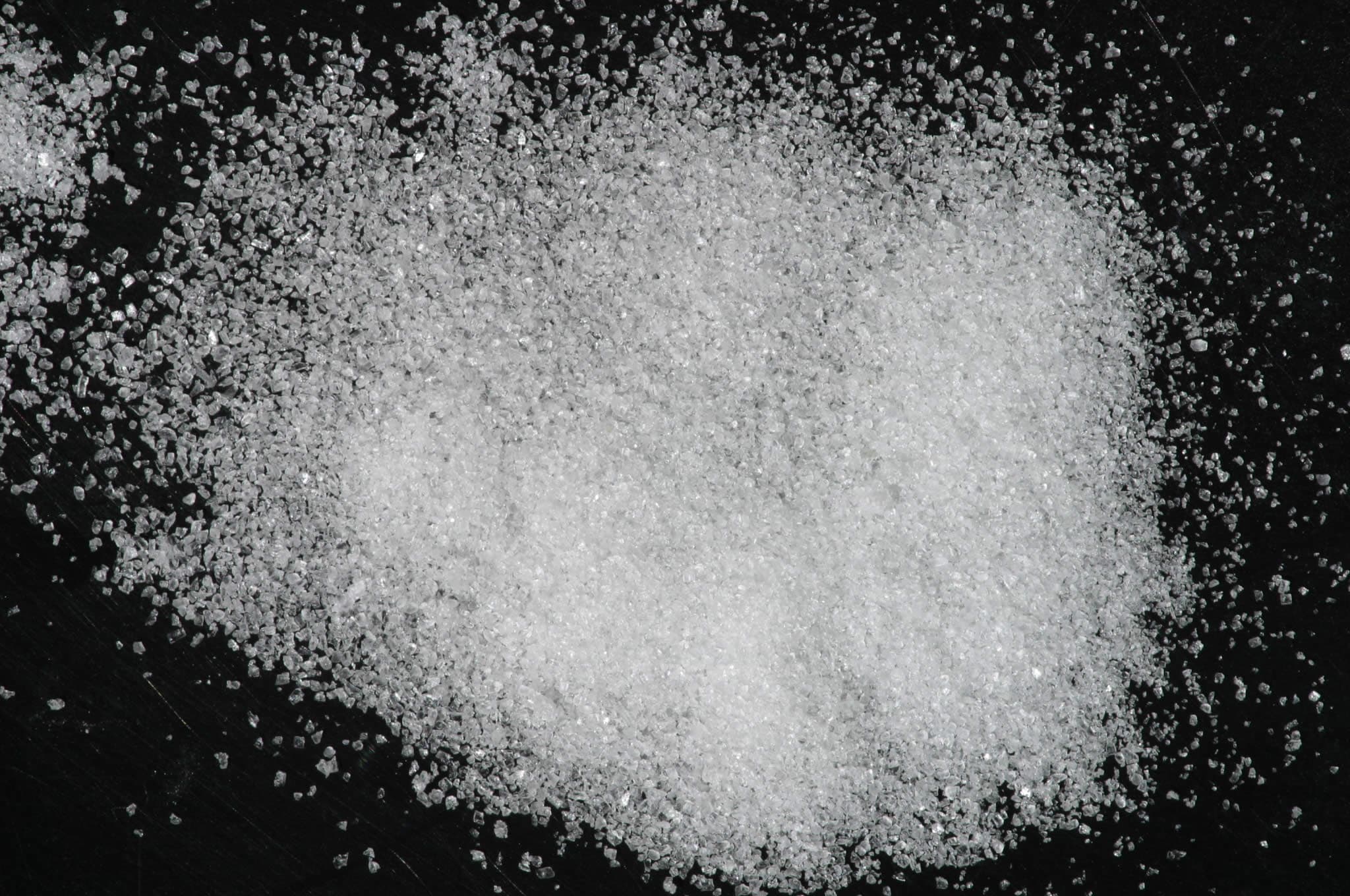
Sample photograph — USGS Spectral Library v7
Spectrum Details
- Modality
- FTIR
- Category
- mineral
- Material Type
- Halide
- Sample ID
- HS433.1B, HS433.2B, HS433.3B, HS433.4B, HS433.6
- Collection Locality
- Kansas
- Spectral Purity
- 1a2_3_4_ # Halite HS433.1B # 1= 0.2-3, 2= 1.5-6, 3= 6-25, 4= 20-150 microns SPECTRAL_PURITY: 1a2_3_4_ # Halite HS433.2B # 1= 0.2-3, 2= 1.5-6, 3= 6-25, 4= 20-150 microns SPECTRAL_PURITY: 1a2a3a4u # Halite HS433.3B # 1= 0.2-3, 2= 1.5-6, 3= 6-25, 4= 20-150 microns SPECTRAL_PURITY: 1a2_3_4_ # Halite HS433.4B # 1= 0.2-3, 2= 1.5-6, 3= 6-25, 4= 20-150 microns SPECTRAL_PURITY: 1a2_3_4_ # Halite HS433.6 # 1= 0.2-3, 2= 1.5-6, 3= 6-25, 4= 20-150 microns
- Composition / XRD
- None # XRF, EPMA, ICP(Trace), WChem
- Sample Description
- "H-4. Halite. Kansas (433B). Halite, NaCl, occurs primarily as extensive beds formed by evaporation of trapped bodies of salt water. It may also form as an efflorescence on the surface in arid areas, or as a sublimation product in volcanic regions. It is colorless when pure, but more typically orange or red, and may be gray, yellow or blue. The common orange or red color is due to inclusions of ferric oxide material, while the gray is due to inclusions of clay. Like many of the halides, halite is subject to color center formation, which is responsible for the blue and purple tints. This sample is colorless and appears to be quite pure. It displays some very weak water bands from water in fluid inclusions near 1.95 and 2.25 µ, but is otherwise spectrally featureless, except for the 0-5 µ particle size range. The distinct brownish tone of this size range is caused by polyurethane contamination from the fluid energy mill." Hunt, G.R., J.W. Salisbury, and C.J. Lenhoff, 1972, Visible and near-infrared spectra of minerals and rocks: V. Halides, phosphates, arsenates, vanadates and borates. Modern Geology, v. 3, p. 121-132. Grain size fractions are indicated by the extension after the sample number: .1B = IMAGE_OF_SAMPLE:
- XRD Analysis
- 40 kV - 30 mA, 6.5-9.5 keV File: halt433.mdi, *.out (smear mount on quartz plate) References: JCPDS #5-628; Huebner's internal standard listings Found: Halite Comment: Reflections symmetrical but not sharp and the alpha1-alpha2 splitting is not distinct; the degree of crystallization is only moderate. Lattice spacing's are consistent with NaCl composition (and inconsistent with (Na,K)Cl solid solution. J.S. Huebner, J. Pickrell, and T. Schaefer, 1994, written communication.
- X Units
- cm⁻¹
- Y Units
- Absorbance
- Data Points
- 1,801
Download
Attribution
USGS Spectral Library Version 7, U.S. Geological Survey
License: Public Domain
DOI: 10.3133/ds1035Analyze in Workbench
Open this spectrum in the SpectralBench workbench for advanced analysis, peak detection, and comparison.
Open Workbench