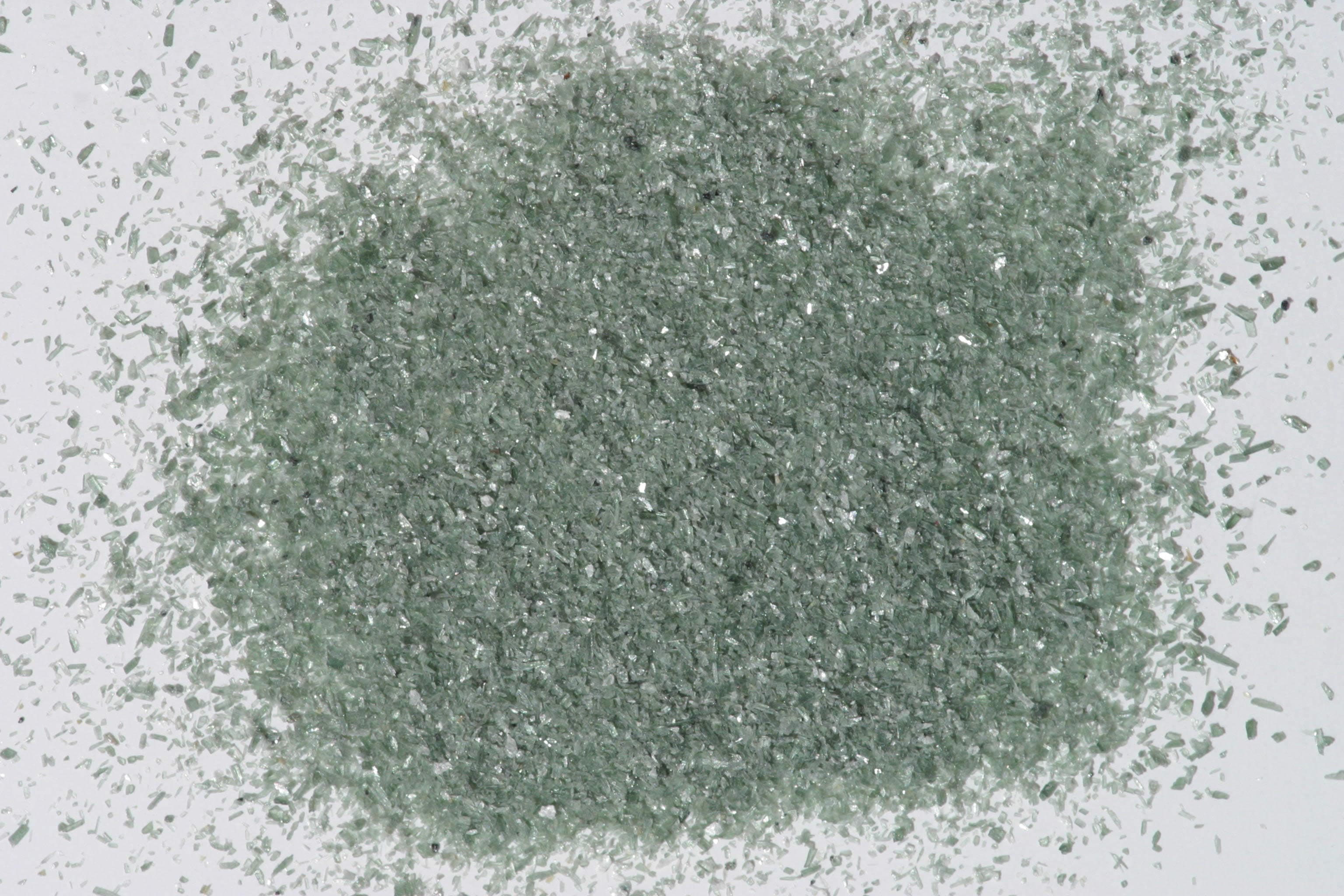
Hornblende — FTIR1,801 points · 400–4000 cm⁻¹
Spectrum Details
- Modality
- FTIR
- Category
- mineral
- Material Type
- Inosilicate
- Sample ID
- HS16.2B, HS16.3B, HS16.4B, HS16.6
- Collection Locality
- Ontario
- Spectral Purity
- 1b2_3_4_ # Hornblende HS16.2B # 1= 0.2-3, 2= 1.5-6, 3= 6-25, 4= 20-150 microns SPECTRAL_PURITY: 1b2c3b4_ # Hornblende HS16.3B # 1= 0.2-3, 2= 1.5-6, 3= 6-25, 4= 20-150 microns SPECTRAL_PURITY: 1b2_3_4_ # Hornblende HS16.4B # 1= 0.2-3, 2= 1.5-6, 3= 6-25, 4= 20-150 microns SPECTRAL_PURITY: 1b2_3_4_ # Hornblende HS16.6 # 1= 0.2-3, 2= 1.5-6, 3= 6-25, 4= 20-150 microns
- Composition / XRD
- None # XRF, EPMA, ICP(Trace), WChem
- Sample Description
- Forms series from Magnesiohornblende to Ferrohornblende. "I-22 Hornblende 16B--Ontario. (Ca, Na9K)2-3- (Mg, Fe^2+, Fe^3+, Al)5(Si6(Si, Al)2O22)(OH, F)2: Hornblende is the name given to a very complex series which varies with respect to at least ten major components. This spectrum is quite typical of hornblende spectra, which display a rapid fall off in intensity from 2.0µ to the blue due to broad Fe^2+ and Fe^3+ absorption near 0.7µ and 1.0µ. The hydroxyl band at 1.4 is also reduced in intensity or missing, leaving only OH features at 2.33µ and 2.4µ." Hunt, G.R., J.W. Salisbury, and C.J. Lenhoff, 1973, Visible and near-infrared spectra of minerals and rocks: VI. Additional silicates. Modern Geology, v. 4, p. 85-106. Grain size fractions are indicated by the extension after the sample number: .2B = IMAGE_OF_SAMPLE: NO PHOTO
- XRD Analysis
- 40 kV - 30 mA, 7.3-9.5 keV File: hnbld16.out, -.mdi References: Borg and Smith (1969); Huebner's reference patterns Found: clinoamphibole, K-mica, trace chlorite (?), unindexed reflections at 3.02, 2.09, and 2.06 Angstroms Comment: The clinamphibole patterns is consistent with that of hornblende.
- X Units
- cm⁻¹
- Y Units
- Absorbance
- Data Points
- 1,801
Download
Attribution
USGS Spectral Library Version 7, U.S. Geological Survey
License: Public Domain
DOI: 10.3133/ds1035Analyze in Workbench
Open this spectrum in the SpectralBench workbench for advanced analysis, peak detection, and comparison.
Open Workbench