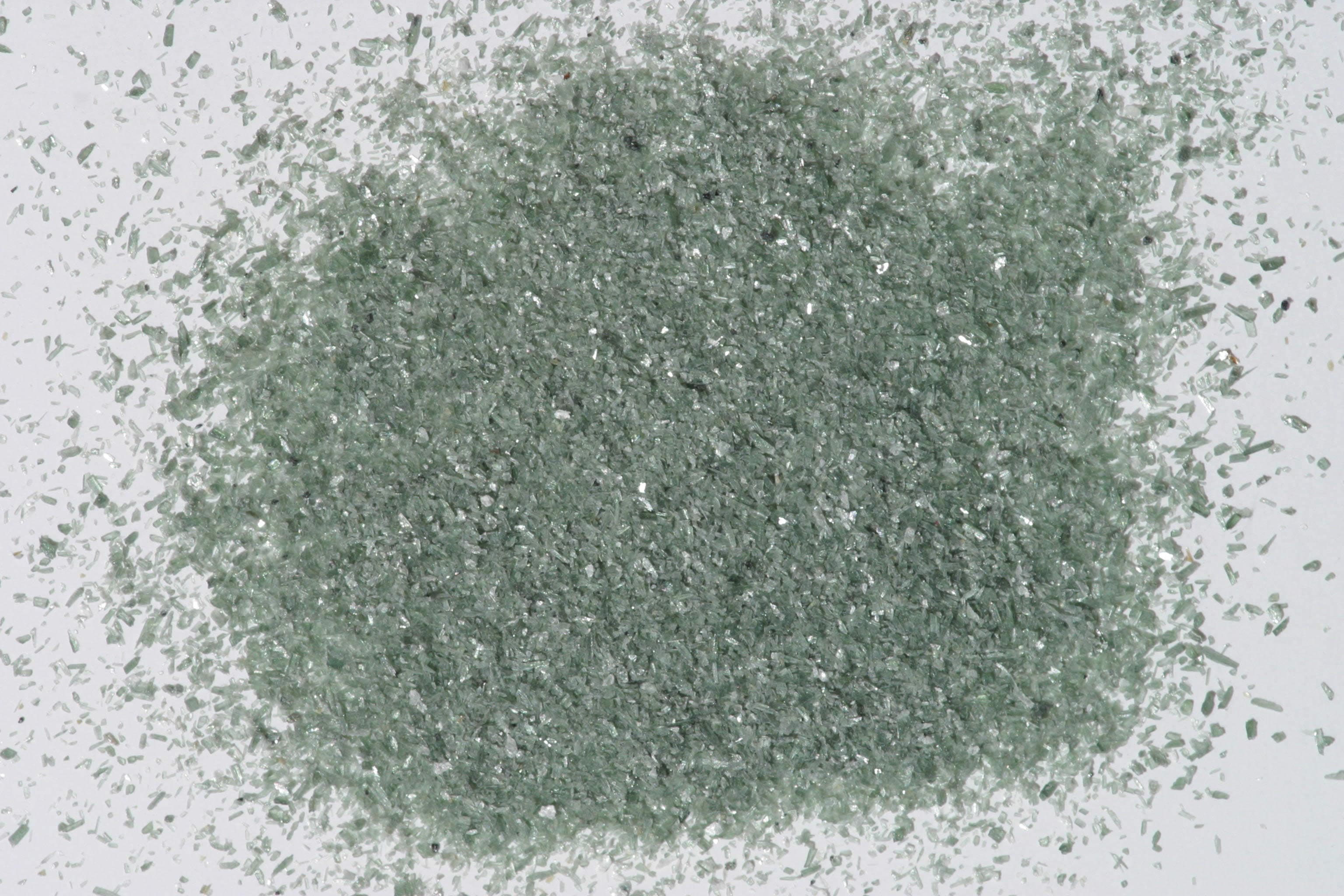
Monticellite — FTIR1,801 points · 400–4000 cm⁻¹

Sample photograph — USGS Spectral Library v7
Spectrum Details
- Modality
- FTIR
- Category
- mineral
- Material Type
- Nesosilicate
- Sample ID
- HS339.1B, HS339.2B, HS339.3B, HS339.4B
- Collection Locality
- Texas
- Spectral Purity
- 1b2_3_4_ # HS339.1B # 1= 0.2-3, 2= 1.5-6, 3= 6-25, 4= 20-150 microns SPECTRAL_PURITY: 1b2_3_4_ # HS339.2B # 1= 0.2-3, 2= 1.5-6, 3= 6-25, 4= 20-150 microns SPECTRAL_PURITY: 1c2c3c4c # HS339.3B # 1= 0.2-3, 2= 1.5-6, 3= 6-25, 4= 20-150 microns SPECTRAL_PURITY: 1c2_3_4_ # HS339.4B # 1= 0.2-3, 2= 1.5-6, 3= 6-25, 4= 20-150 microns
- Composition / XRD
- None # XRF, EPMA, ICP(Trace), WChem COMPOSITION_TRACE:
- Sample Description
- Forms series with Kirschsteinite. Original spectrum published in: Hunt, G.R., J.W. Salisbury, and C.J. Lenhoff, 1973, Visible and near-infrared spectra of minerals and rocks: VI. Additional silicates. Modern Geology, v. 4, p. 85-106. With the comment:"This sample is spectrally quite featureless except for a very weak band near 1.0µm and weak features in the visible. Although monticellite typically shows remarkably small departures from ideal composition, it is obvious that a small amount of Fe^2+ has substituted for the Mg, producing both the 1µm band and the fall off toward the blue in the visible." Grain size fractions are indicated by the extension after the sample number: .1B = IMAGE_OF_SAMPLE:
- XRD Analysis
- 40 kV - 30 mA, 6.5-9.5 keV References: JCPDS #35-590 Found: Monticellite; weak reflections at 5.6, 2.45, 1.56, 1.42 Angstroms Comment: Monticellite is well crystallized. J.S.Huebner, J.Pickrell, T. Schaefer,written communication(USGS)
- X Units
- cm⁻¹
- Y Units
- Absorbance
- Data Points
- 1,801
Download
Attribution
USGS Spectral Library Version 7, U.S. Geological Survey
License: Public Domain
DOI: 10.3133/ds1035Analyze in Workbench
Open this spectrum in the SpectralBench workbench for advanced analysis, peak detection, and comparison.
Open Workbench