Neodymium Oxide — FTIR1,801 points · 400–4000 cm⁻¹
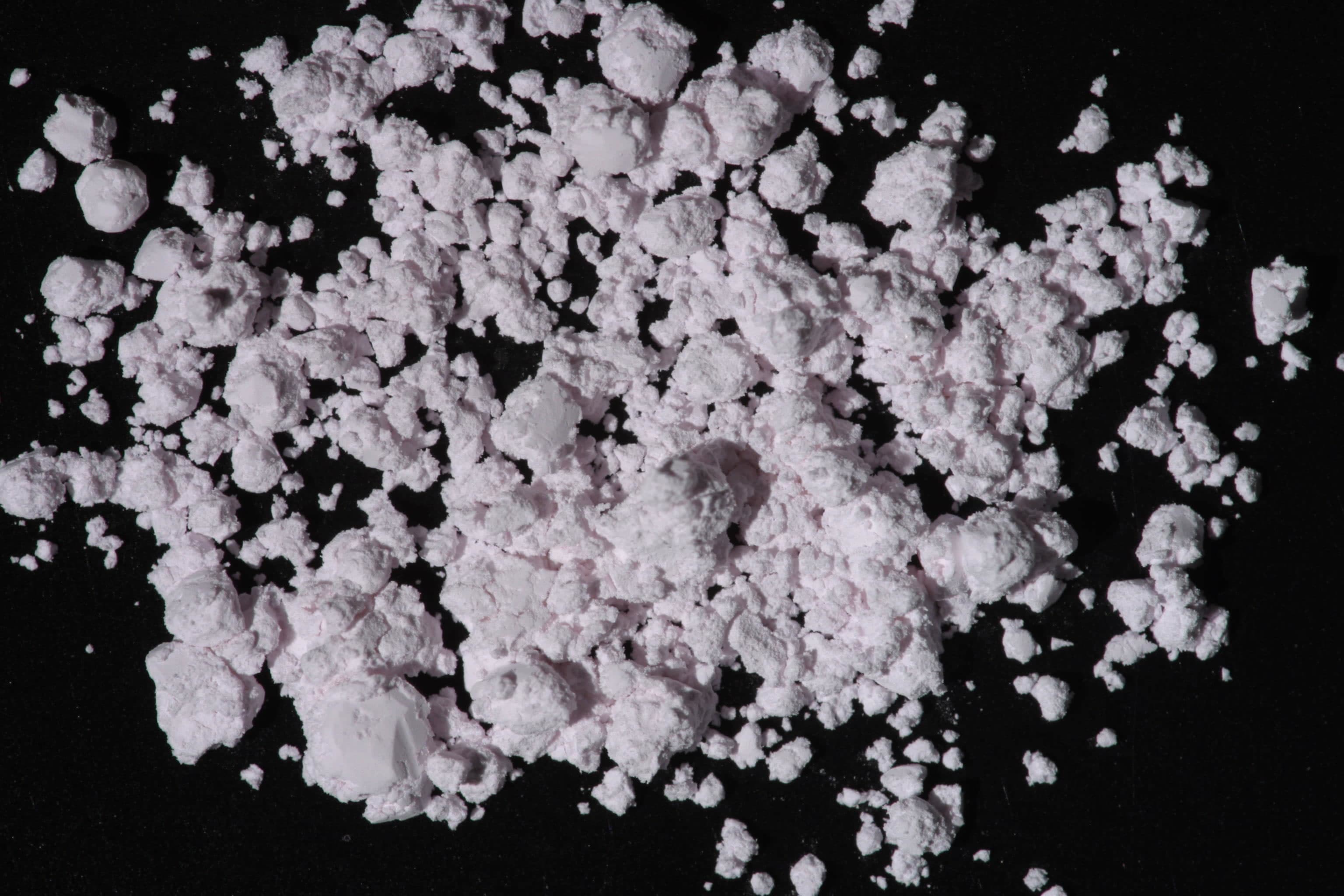
Sample photograph — USGS Spectral Library v7
Spectrum Details
- Modality
- FTIR
- Category
- man-made
- Material Type
- Oxide
- Sample ID
- GDS34
- Collection Locality
- REE Standard Reagent
- Spectral Purity
- 1a2a3a4_ # 1= 0.2-3, 2= 1.5-6, 3= 6-25, 4= 20-150 microns
- Composition / XRD
- None # XRF, EPMA, ICP(Trace), WChem COMPOSITION_TRACE: None
- Sample Description
- Spex Standard 84.3% Nd Lot No. 02831R Reflectance spectra for reagent-grade Eu2O3, Nd2O3, Sm2O3, and Pr2O3 (Fig. 2) show the intense, narrow absorption bands caused by electronic transitions in trivalent rare earth elements (White, 1967; Dieke and Crosswhite, 1963). The absorption patterns produced by each of these oxides is distinctive for the particular rare earth element involved. The positions of the major bands for Nd2O3 and Sm2O3 are indicated in Table 2. Absorption features that occur near 1.4 and 1.9 µ cannot be unambiguously assigned to water or hydroxyl since some rare earth element oxides, notably Sm2O3 and Pr2O3, have electronic bands in these wavelength regions (Fig. 2). The cause of the 2.35µ bands in two of the rare earth element oxide samples (Fig. 2) also has not been determined. Although White (1967) tentatively attributed similar features to water, the bands could be produced by minor amounts of CO3 or possibly by an undocumented REE-OH vibrational overtone. No carbonate or hydroxyl-bearing phases were detected by X-ray diffraction analysis of the rare earth element oxide samples." Rowan, Lawrence C., Kingston, Marguerite J., Crowley, James K., Spectral Reflectance of Carbonatites and Related Alkalic Igneous Rocks: Selected Samples from Four North American Localities, Economic Geology, Vol 81, 1986, pp. 857-871. IMAGE_OF_SAMPLE:
- XRD Analysis
- 40 kV - 30 mA, 6.5-9.5 keV File: ndoxid34.mdi, *.out (smear mount on quartz plate) References: JCPDS #21-579, 43-1023, 6-601, 13-85; Huebner's reference patterns. Found: Neodymium Hydroxide, Nd(OH)3 Comment: The hydroxide reflections are sharp at 2 theta
- X Units
- cm⁻¹
- Y Units
- Absorbance
- Data Points
- 1,801
Download
Attribution
USGS Spectral Library Version 7, U.S. Geological Survey
License: Public Domain
DOI: 10.3133/ds1035Analyze in Workbench
Open this spectrum in the SpectralBench workbench for advanced analysis, peak detection, and comparison.
Open Workbench