Nepheline — FTIR1,801 points · 400–4000 cm⁻¹
Spectrum Details
- Modality
- FTIR
- Category
- mineral
- Material Type
- Tectosilicate
- Sample ID
- HS19.1B, HS19.3
- Collection Locality
- Bancroft, Ontario
- Spectral Purity
- 1c2_3_4_ # HS19.1B # 1= 0.2-3, 2= 1.5-6, 3= 6-25, 4= 20-150 microns SPECTRAL_PURITY: 1c2b3c4_ # HS19.3 # 1= 0.2-3, 2= 1.5-6, 3= 6-25, 4= 20-150 microns
- Composition / XRD
- None # XRF, EPMA, ICP(Trace), WChem COMPOSITION_TRACE: None
- Sample Description
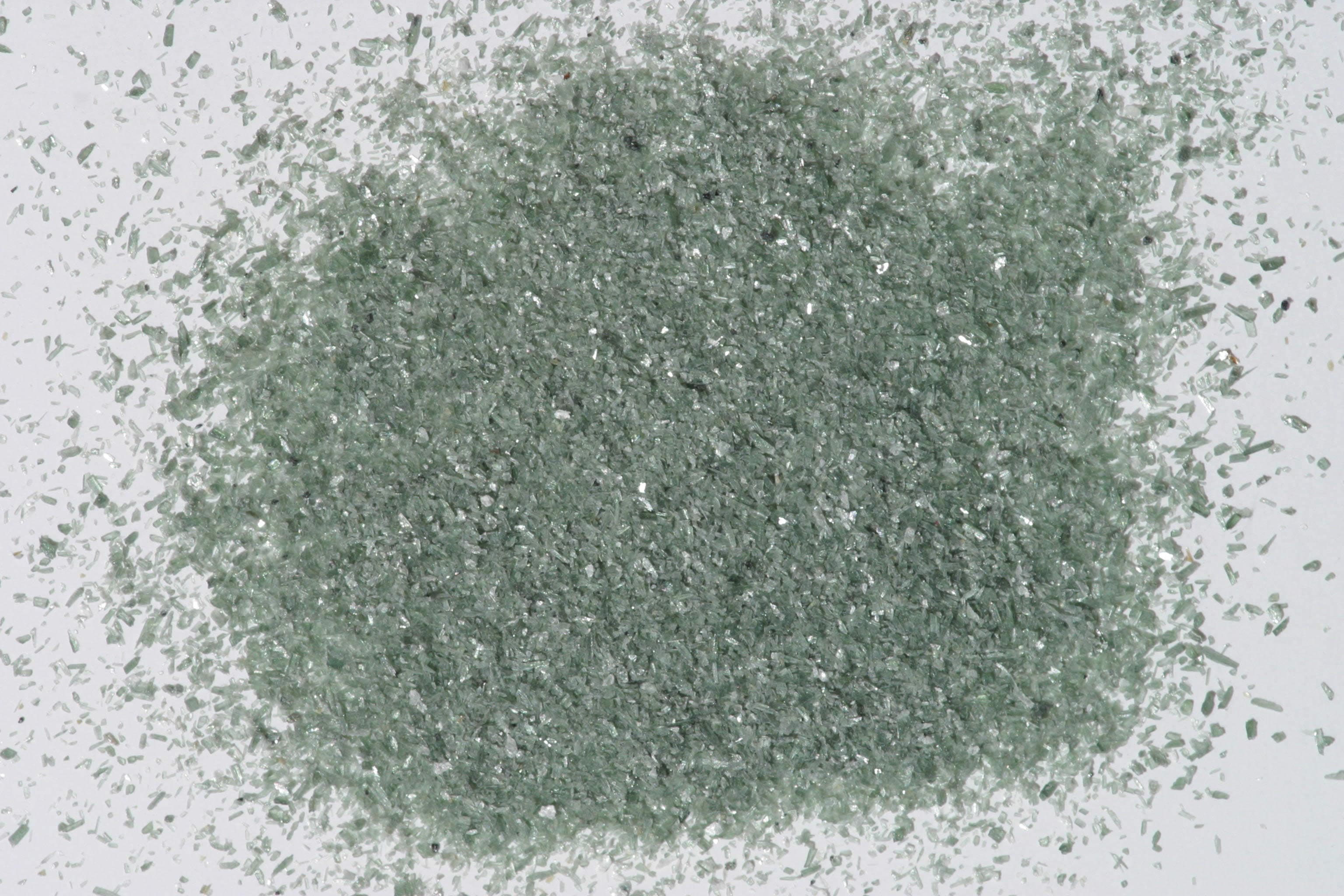
- "S-13. Nepheline. Bancroft, Ontario (19). This sodium-potassium aluminum silicate, (Na,K)(Al,Si)2O4, is found in igneous rocks whose magmas contained insufficient silica to combine with the soda present to form feldspar. This nepheline sample illustrates very clearly the effect of grinder steel contamination. Note that the two contaminated finer particle size fractions have both reduced reflectivity and their near-infrared bands eliminated. In contrast, the uppermost curve of uncontaminated 0.5µ nepheline is both highly reflective and retains its spectral features. The bands near 1.4, 1.9 and 2.5µ are due to water, presumably present as fluid inclusions in microscopic vesicles within the nepheline. The water is not present as part of the nepheline lattice, and the only contaminant (a very small amount of biotite) would not produce these bands." Hunt, G.R., J.W. Salisbury, 1970, Visible and near-infrared spectra of minerals and rocks: I. Silicate minerals. Modern Geology, v. 1, p. 283-300. Grain size fractions are indicated by the extension after the sample number: .1B = IMAGE_OF_SAMPLE: NO PHOTO
- XRD Analysis
- 40 kV - 30 mA, 6.5-9.5 keV Files: nephlin19.out, -.mdi, fine (.1B) fraction, ground once; nephl19b.*, fine fraction not ground; nephl19c.*, 70-250 micrometer fraction (.3) ground once References: Borg and Smith (1969) for nepheline; JCPDS 25-776 and 24-176 (cancrinite), 37-476 (sodalite); Huebner's reference patterns; Deer and others (1963, vol. 4) Found: Nepheline with Na/(Na+K)= approximate 0.75, trace phlogopite; traces of cancrinite (probable), sodalite (possible). Comment: HS-19.3 gives an exceptionally well-crystallized pattern. Unindexed reflections at 5.64, 4.03, 3.44, 2.94, and 2.81 may prove to be nepheline peaks that are too weak to be reported in the literature. J.S.Huebner, J. Pickrell, T. Schaefer, written communication 1994
- X Units
- cm⁻¹
- Y Units
- Absorbance
- Data Points
- 1,801
Download
Attribution
USGS Spectral Library Version 7, U.S. Geological Survey
License: Public Domain
DOI: 10.3133/ds1035Analyze in Workbench
Open this spectrum in the SpectralBench workbench for advanced analysis, peak detection, and comparison.
Open Workbench