Pigeonite — NIR2,126 points · 4000–12500 cm⁻¹
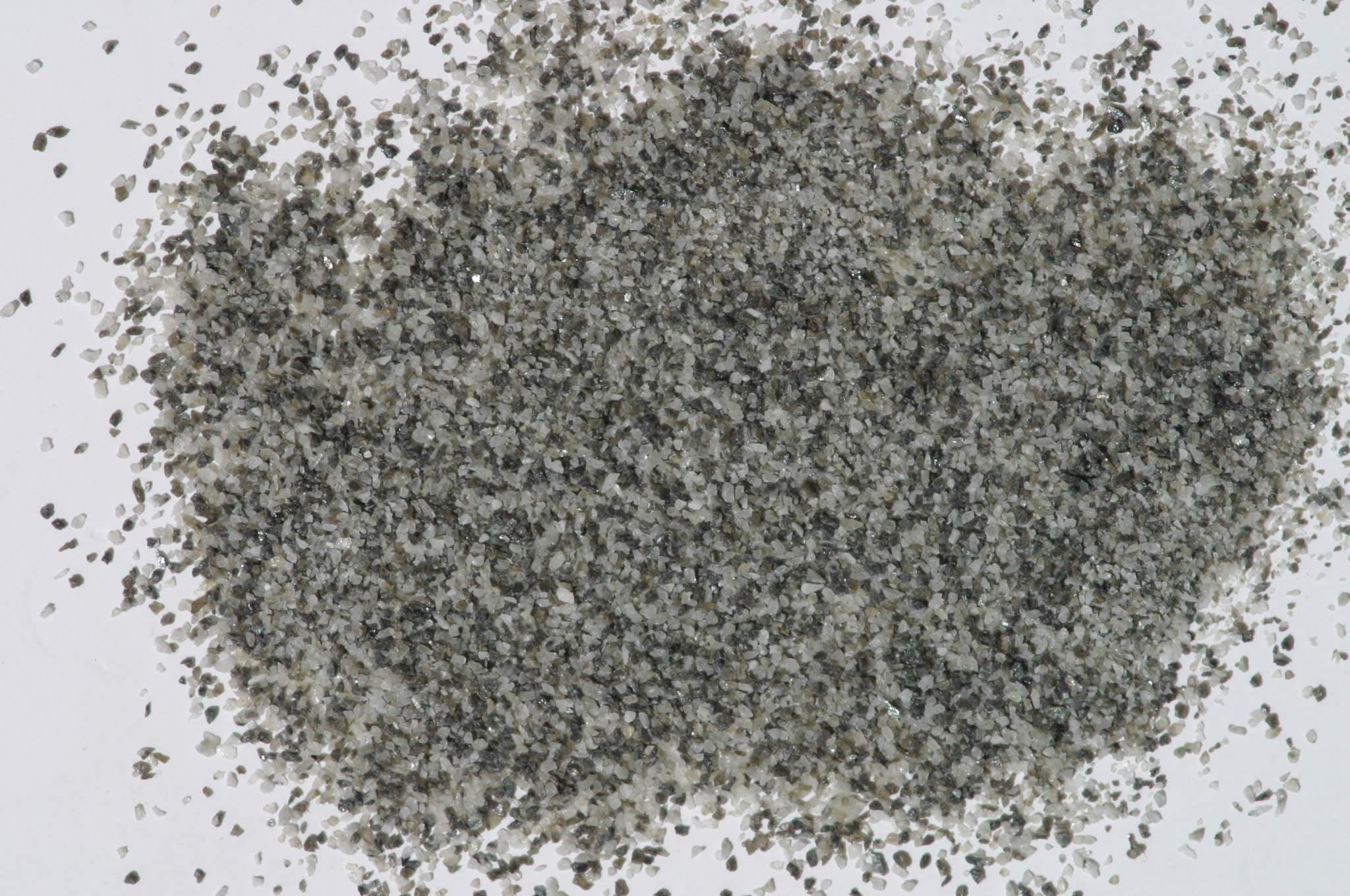
Sample photograph — USGS Spectral Library v7
Spectrum Details
- Modality
- NIR
- Category
- mineral
- Material Type
- Inosilicate
- Sample ID
- HS199.1B, HS199.2B, HS199.3B, HS199.4B
- Collection Locality
- Loudoun County, Virginia
- Spectral Purity
- 1b2_3_4_ # HS199.1B # 1= 0.2-3, 2= 1.5-6, 3= 6-25, 4= 20-150 microns SPECTRAL_PURITY: 1c2_3_4_ # HS199.2B # 1= 0.2-3, 2= 1.5-6, 3= 6-25, 4= 20-150 microns SPECTRAL_PURITY: 1c2c3c4_ # HS199.3B # 1= 0.2-3, 2= 1.5-6, 3= 6-25, 4= 20-150 microns SPECTRAL_PURITY: 1d2_3_4_ # HS199.4B # 1= 0.2-3, 2= 1.5-6, 3= 6-25, 4= 20-150 microns
- Composition / XRD
- EPMA # XRF, EPMA, ICP(Trace), WChem
- Sample Description
- I-6 Pigeonite 199B-Londoun Co., Va. (Mg, Fe^2+, Ca) (Mg, Fe^2+) (Si2O6): This mineral is common in igneous rocks of the extrusive volcanic type, particularly in andesites and dacites. Its spectrum is quite flat with a broad feature at 0.95µ, typical of six-fold coordinated ferrous iron. Hunt, G.R., J.W. Salisbury, and C.J. Lenhoff, 1973, Visible and near-infrared spectra of minerals and rocks: VI. Additional silicates. Modern Geology, v. 4, p. 85-106. Grain size fractions are indicated by the extension after the sample number: .1B = IMAGE_OF_SAMPLE:
- XRD Analysis
- 40 kV - 30 mA, 7.3-9.5 keV File: pignt199.out, -.mdi (smear mount on quartz plate) References: Borg and Smith (1969); Huebner's reference patterns. Found: high albite, clinopyroxene, minor quartz, many weak unidentified reflections, including a possible ilmenite (211) Comment: Sharp reflections suggest good crystallinity and compositional heterogeneity. Quartz has some unusual relative intensities, perhaps because the amount present is insufficient to give a random distribution of grain (lattice) orientations. The clinopyroxene pattern is very similar to that obtained from a lunar augite-pigeonite intergrowth; in neither case there are two clinopyroxenes resolved in the powder pattern. J.S. Huebner, J. Pickrell, T. Schaefer, written communication(USGS)
- X Units
- cm⁻¹
- Y Units
- Absorbance
- Data Points
- 2,126
Download
Attribution
USGS Spectral Library Version 7, U.S. Geological Survey
License: Public Domain
DOI: 10.3133/ds1035Analyze in Workbench
Open this spectrum in the SpectralBench workbench for advanced analysis, peak detection, and comparison.
Open Workbench