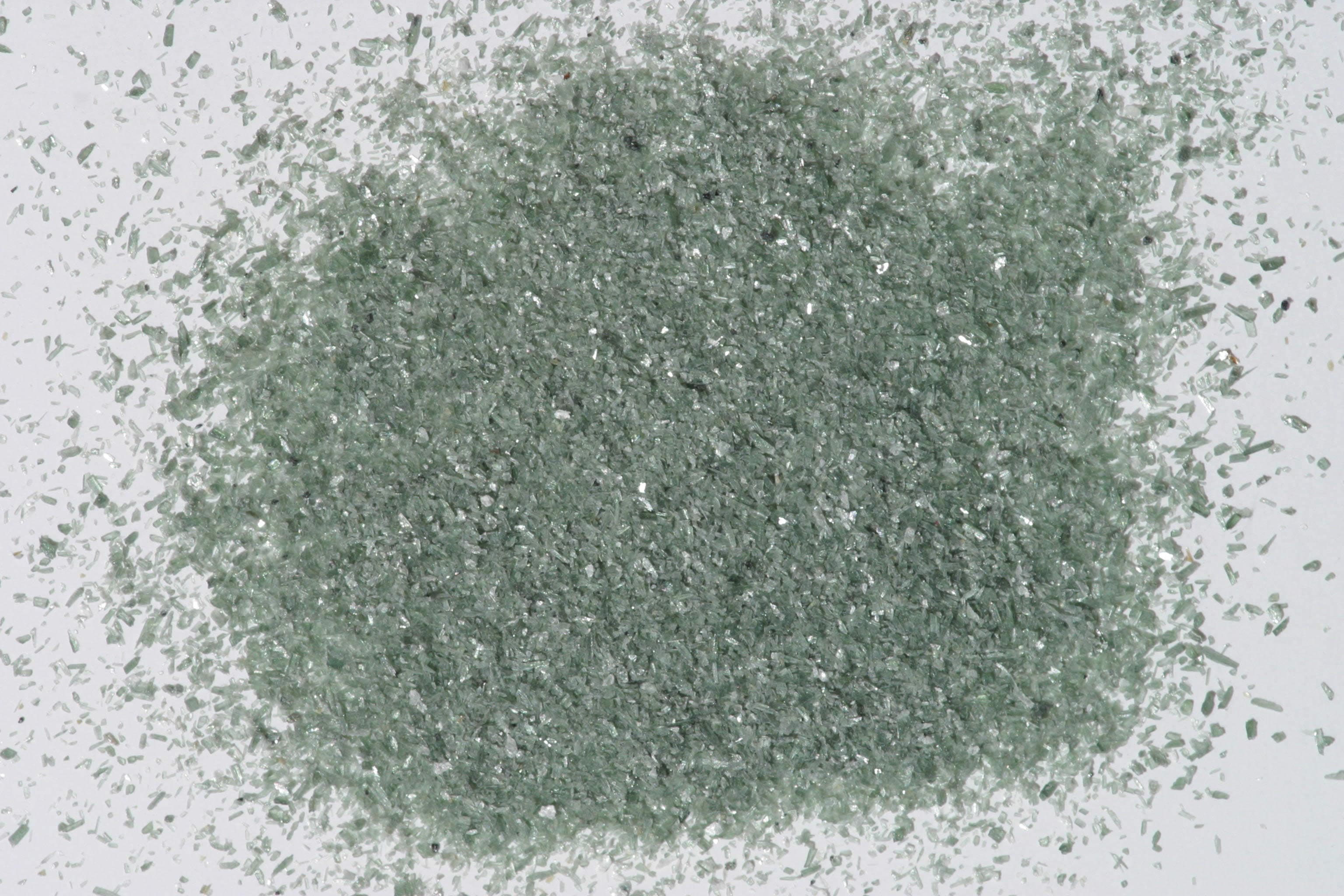
Pyroxene — FTIR1,801 points · 400–4000 cm⁻¹
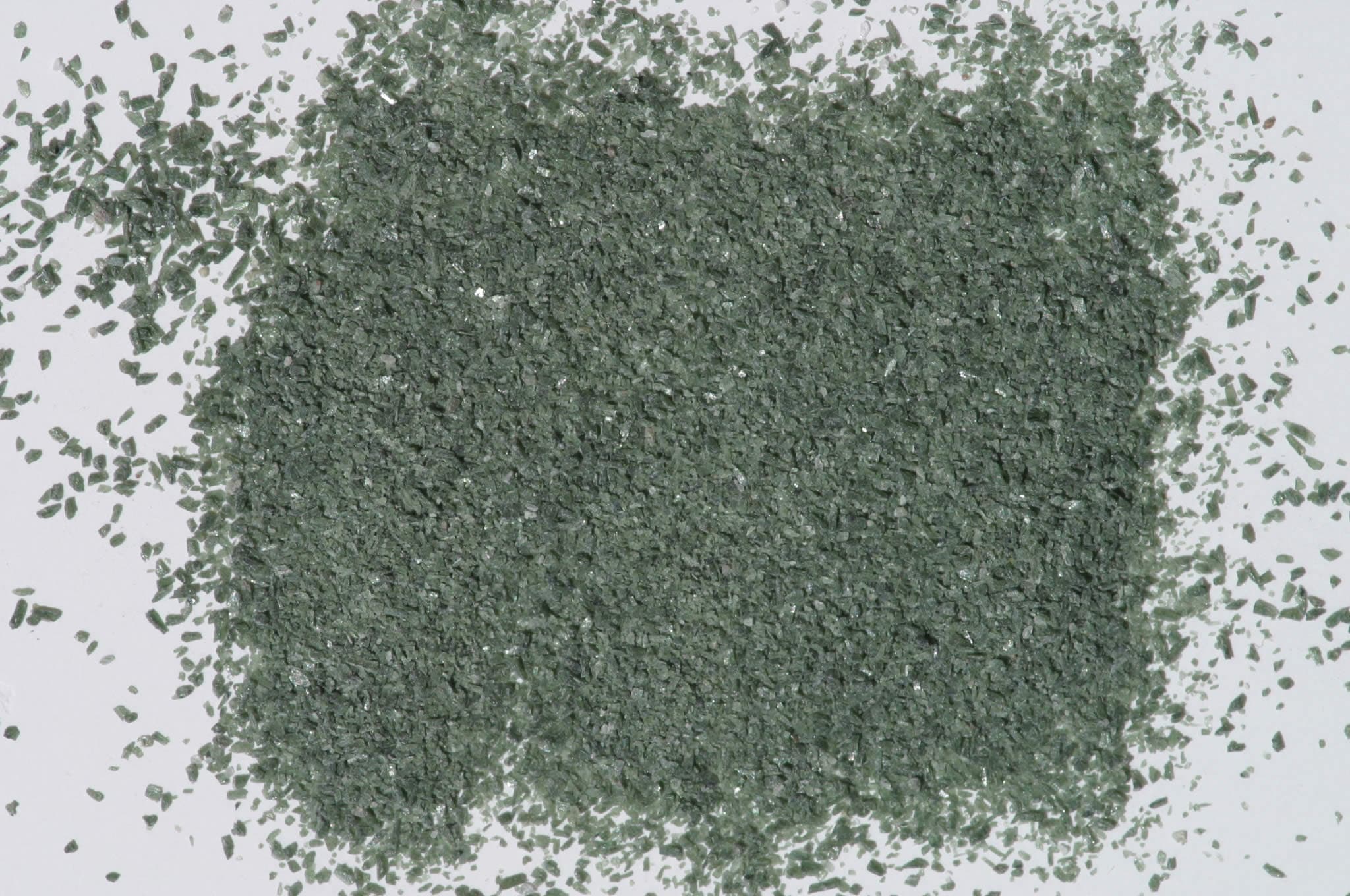
Sample photograph — USGS Spectral Library v7
Spectrum Details
- Modality
- FTIR
- Category
- mineral
- Material Type
- Inosilicate
- Sample ID
- HS119.1B, HS119.2B, HS119.3B, HS119.4B
- Collection Locality
- Oaxaca, Mexico
- Spectral Purity
- 1c2_3_4_ # HS119.1B # 1= 0.2-3, 2= 1.5-6, 3= 6-25, 4= 20-150 microns SPECTRAL_PURITY: 1c2_3_4_ # HS119.2B # 1= 0.2-3, 2= 1.5-6, 3= 6-25, 4= 20-150 microns SPECTRAL_PURITY: 1c2c3c4c # HS119.3B # 1= 0.2-3, 2= 1.5-6, 3= 6-25, 4= 20-150 microns SPECTRAL_PURITY: 1c2_3_4_ # HS119.4B # 1= 0.2-3, 2= 1.5-6, 3= 6-25, 4= 20-150 microns
- Composition / XRD
- None # XRF, EPMA, ICP(Trace), WChem COMPOSITION_TRACE:
- Sample Description
- "I-4 Augite 119B-Oaxaca, Mexico. (Ca, Mg, Fe^2+, Fe^3+, Ti, Al)2(Si, Al)2O6: Augite is an important ferromagnesian mineral of igneous rocks, and is particularly common in basic rocks. It occurs, but less frequently, in intermediate and ultrabasic rocks. The spectrum is dominated by both Fe^2+ and Fe^3+ absorptions, which produce a very general broad band centered near 1.0µ. The faint bands near 2.3µ are probably due to hydroxyl combinations even though the 1.4µ band is indiscernible." Hunt, G.R., J.W. Salisbury, and C.J. Lenhoff, 1973, Visible and near-infrared spectra of minerals and rocks: VI. Additional silicates. Modern Geology, v. 4, p. 85-106. Grain size fractions are indicated by the extension after the sample number: .1B = IMAGE_OF_SAMPLE:
- XRD Analysis
- 40 kV - 30 mA, 7.0-9.5 keV File: Pxn119.out, -.mdi References: Borg and Smith (1969); Huebner's reference patterns Found: Clinopyroxene; weak reflections at 6.5 and 3.14 Angstroms; possibly significant intensity maxima at 9.4 and 8.4 Angstroms. Comment: Well crystallized pyroxene. Excellent overall match with diopside patterns, but the lattice spacings are slightly larger than in HS15.3B or endmember diopside, suggesting solid solution with hedenbergite. The relatively high background is consistent with secondary radiation due to iron. The two weak reflections are in the positions of plagioclase unindexed reflections that do not correlate with any of the pyrrhotite polytypes suggesting an additional phase red orientation? J.S.Huebner, J. Pickrell, T. Schaefer, written communication(USGS 1994) Augite(Major),Ferropargasite(trace),Ferrohornblende(trace) Sutley April, 2005.
- X Units
- cm⁻¹
- Y Units
- Absorbance
- Data Points
- 1,801
Download
Attribution
USGS Spectral Library Version 7, U.S. Geological Survey
License: Public Domain
DOI: 10.3133/ds1035Analyze in Workbench
Open this spectrum in the SpectralBench workbench for advanced analysis, peak detection, and comparison.
Open Workbench