Serpentine — NIR2,126 points · 4000–12500 cm⁻¹
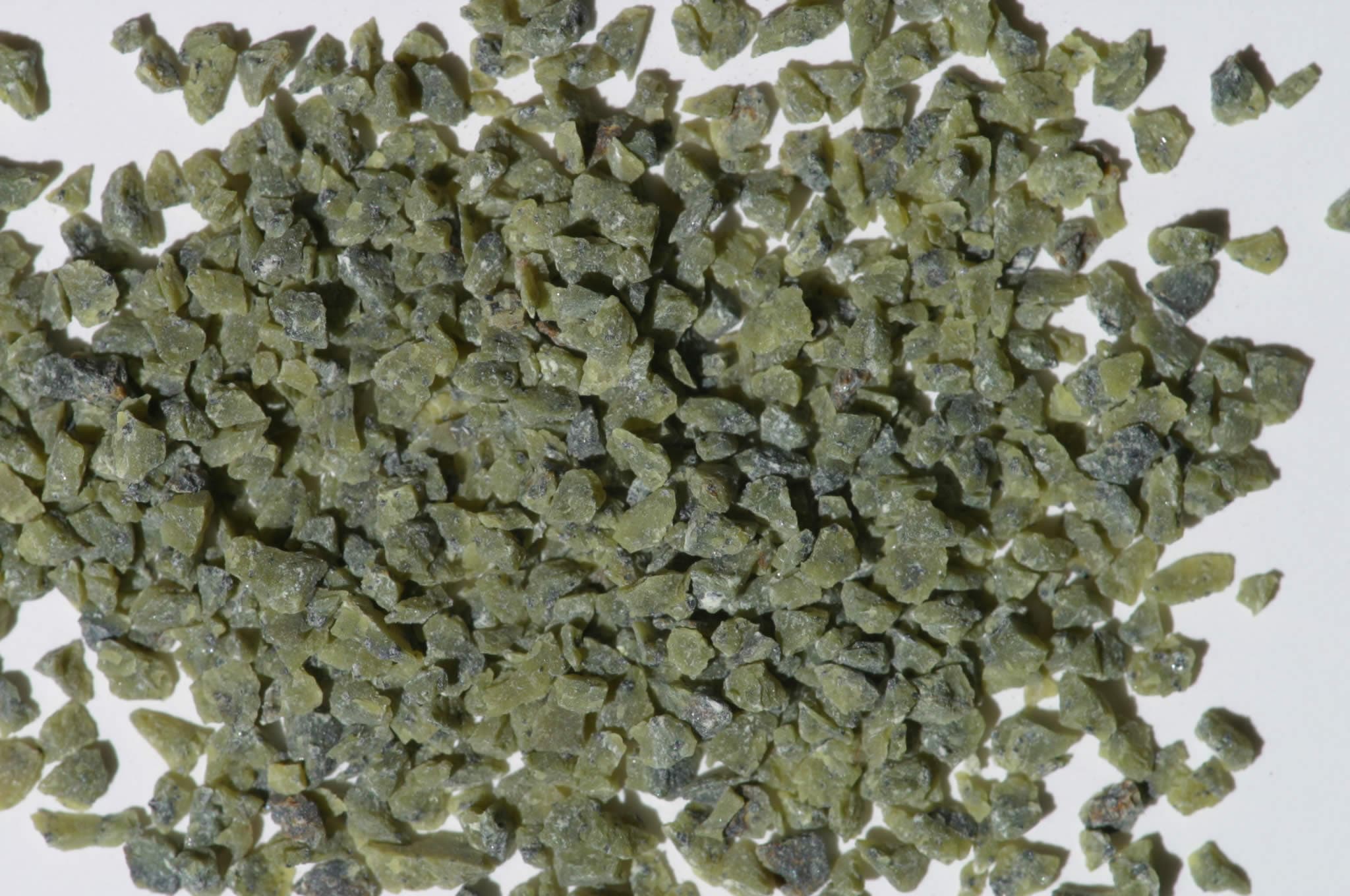
Sample photograph — USGS Spectral Library v7
Spectrum Details
- Modality
- NIR
- Category
- mineral
- Material Type
- Phyllosilicate
- Sample ID
- HS318.1B, HS318.2B, HS318.3B, HS318.4B, HS318.6
- Collection Locality
- Colorado
- Spectral Purity
- 1c2_3_4_ # HS318.1B # 1= 0.2-3, 2= 1.5-6, 3= 6-25, 4= 20-150 microns SPECTRAL_PURITY: 1c2_3_4_ # HS318.2B # 1= 0.2-3, 2= 1.5-6, 3= 6-25, 4= 20-150 microns SPECTRAL_PURITY: 1c2_3_4_ # HS318.3B # 1= 0.2-3, 2= 1.5-6, 3= 6-25, 4= 20-150 microns SPECTRAL_PURITY: 1c2_3_4_ # HS318.4B # 1= 0.2-3, 2= 1.5-6, 3= 6-25, 4= 20-150 microns SPECTRAL_PURITY: 1c2_3_4_ # HS318.6 # 1= 0.2-3, 2= 1.5-6, 3= 6-25, 4= 20-150 microns
- Composition / XRD
- None # XRF, EPMA, ICP(Trace), WChem COMPOSITION_TRACE:
- Sample Description
- "P-11 Serpentine 318B--Colorado. Mg3(Si2O5)- (OH)4: The principal occurrences of serpentine are those in which they are derived by alteration of ultrabasic rocks. Serpentine specimens, like talc, deviate little from the ideal composition. However, also like talc, small amounts of aluminum and iron may replace silicon and magnesium. This particular sample is burdened with magnetite contamination, but still displays ferric ion bands at 0.65 and 0.45µ as well as clearly visible OH features at 1.4µ and 2.34µ. This latter feature is attributed to a combination of the OH stretch with the Mg-OH bend." Hunt, G.R., J.W. Salisbury, and C.J. Lenhoff, 1973, Visible and near-infrared spectra of minerals and rocks: VI. Additional silicates. Modern Geology, v. 4, p. 85-106. Grain size fractions are indicated by the extension after the sample number: .1B = IMAGE_OF_SAMPLE:
- XRD Analysis
- 40 kV - 30 mA, 6.5-9.5 keV File: serpn318.out, -.mdi (edge/random mount) References: S.W. Bailey (1988, Clays and Clay Minerals 36, 193-213); FJWicks and DS O'Hanley (1988, MSA Reviews in Mineralogy 19, 91-167; JCPDS #11-386; Huebner's reference patterns. Found: lizardite, minor chlorite, many unidentified but weak reflections Comment: Excellent match to the JCPDS pattern. Strong pattern with some peak broadening. A member of Bailey's group C serpentines; probable 6T polytype of Wicks and O'Hanley, but with some discrepant intensities. The pattern is more complex than that of a 1T serpentine polytype. J.S. Huebner, J. Pickrell, T. Schaefer, written communication(USGS)
- X Units
- cm⁻¹
- Y Units
- Absorbance
- Data Points
- 2,126
Download
Attribution
USGS Spectral Library Version 7, U.S. Geological Survey
License: Public Domain
DOI: 10.3133/ds1035Analyze in Workbench
Open this spectrum in the SpectralBench workbench for advanced analysis, peak detection, and comparison.
Open Workbench