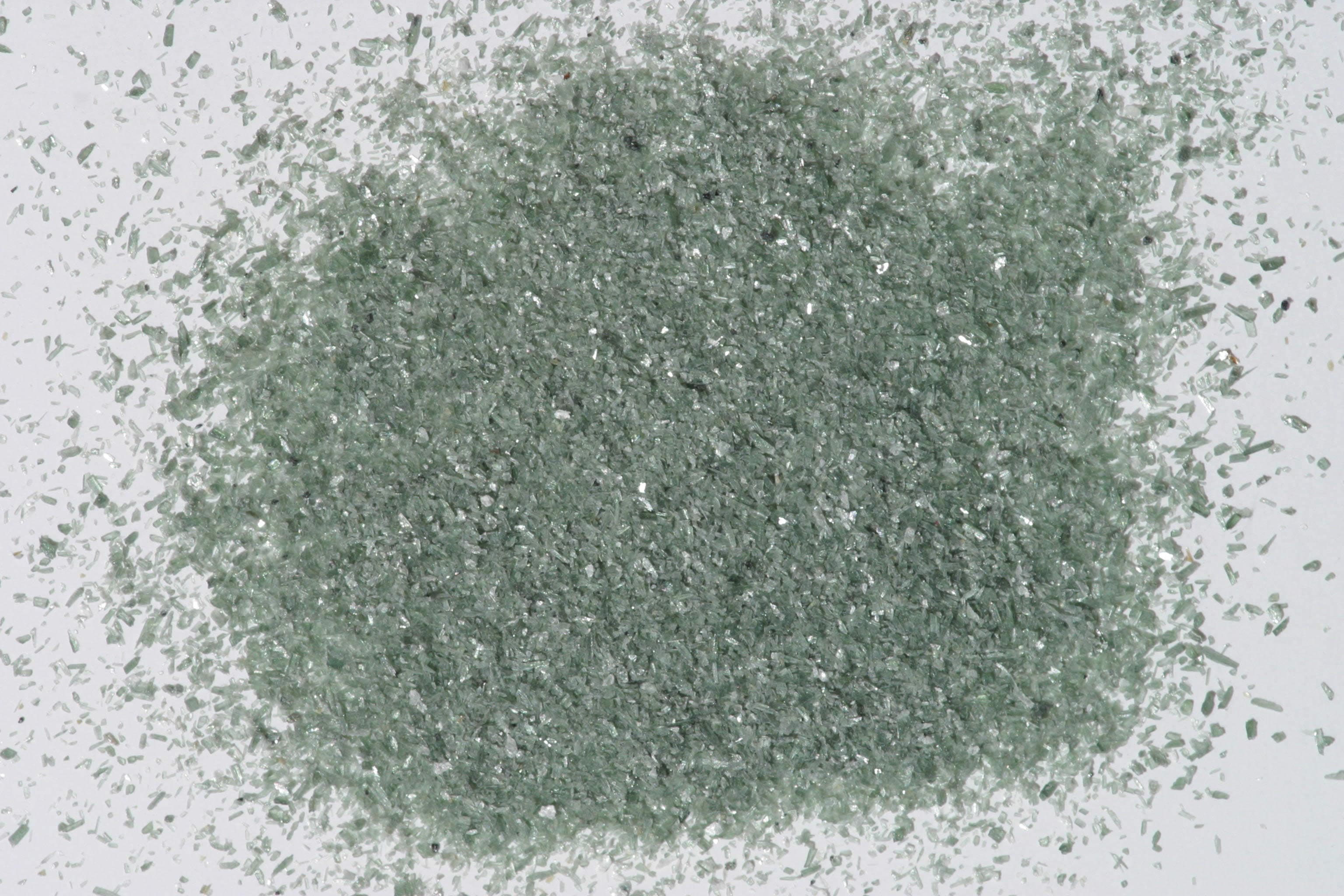
Smaragdite — FTIR1,801 points · 400–4000 cm⁻¹
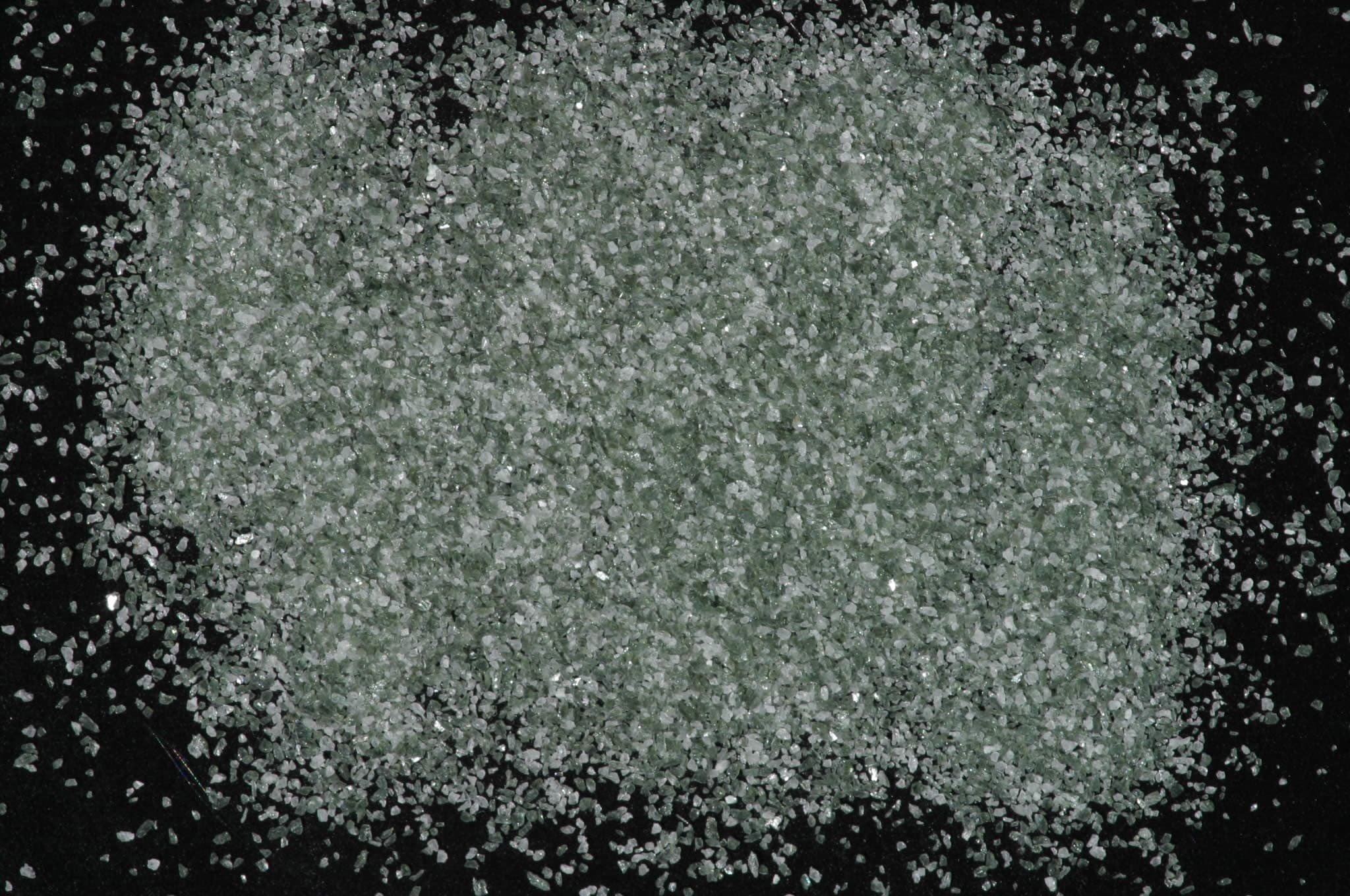
Sample photograph — USGS Spectral Library v7
Spectrum Details
- Modality
- FTIR
- Category
- mineral
- Material Type
- Inosilicate
- Sample ID
- HS290.1B, HS290.2B, HS290.3B, HS290.4B, HS290.6
- Collection Locality
- Clay County, North Carolina
- Spectral Purity
- 1b2_3_4_ # HS290.1B # 1= 0.2-3, 2= 1.5-6, 3= 6-25, 4= 20-150 microns SPECTRAL_PURITY: 1b2_3_4_ # HS290.2B # 1= 0.2-3, 2= 1.5-6, 3= 6-25, 4= 20-150 microns SPECTRAL_PURITY: 1b2b3c4c # HS290.3B # 1= 0.2-3, 2= 1.5-6, 3= 6-25, 4= 20-150 microns SPECTRAL_PURITY: 1b2_3_4_ # HS290.4B # 1= 0.2-3, 2= 1.5-6, 3= 6-25, 4= 20-150 microns SPECTRAL_PURITY: 1b2_3_4_ # HS290.6 # 1= 0.2-3, 2= 1.5-6, 3= 6-25, 4= 20-150 microns
- Composition / XRD
- None # XRF, EPMA, ICP(Trace), WChem COMPOSITION_TRACE:
- Sample Description
- The general formula for members of the amphibole group is W0-1X2Y5Z8O22(OH,F)2, where W represents Na and K in the A site, X denotes Ca^+2, Na^+, Mn^+2, Fe^+2, Mg^+2, and Li^+ in the M4 sites, Y represents Mn^+2, Fe^+2, Mg^+2, Fe^+3, Al^+3, and Ti^+4 in the M1, M2 and M3 sites and Z refers to Si^+4 and Al ^+3 in the tetrahedral sites. This sample's composition is probably similar to ferroactinolite, Ca2(Fe^+2,Mg)5Si8O22(OH)2. "I-16 Smaragdite 290B--Clay Co., N. Carolina: Smaragdite is also a name sometimes given to actinolitic amphibole derived from pyroxene by alteration. Like uralite, it typically contains Al, for which Fe^3+ can substitute. This sample shows both ferrous and ferric iron bands at 1.0µ and 0.7µ in its spectrum, as well as the hydroxyl features at 1.4, 2.32, and 2.38µ. Other weaker features between 2.1 and 2.3µ are hydroxyl-lattice combination bands. Some included water is again indicated by the band at 1.9µ." Hunt, G.R., J.W. Salisbury, and C.J. Lenhoff, 1973, Visible and near-infrared spectra of minerals and rocks: VI. Additional silicates. Modern Geology, v. 4, p. 85-106. Grain size fractions are indicated by the extension after the sample number: .1B = IMAGE_OF_SAMPLE:
- XRD Analysis
- 40 kV - 30 mA, 6.5-9.5 keV File: smarg290.mdi References: Huebner's reference patterns; Hawthorne (1981); Borg and Smith (1969); JCPDS #45-1342, 23-1405, 44-1402, 41-1366 Found: Calcic amphibole, plagioclase feldspar, unidentified minor phase(s) Sought but not found: beryl Comments: Peaks are sharp, symmetric, and show good resolution of alpha1-alpha2 components. Given the quality of the pattern, it is unusual that the interpretation is so indefinite. After indexing following Borg and Smith (1969), the following amphibole unit cell dimensions were obtained: a=9.792(7), b=17.944(24), c=5.289(4) Angstroms, and beta=104.93(7) degrees. These values suggest that the M4 site is occupied by Ca or Ca+Na, excluding the Mg-Fe and sodic amphibole groups (Hawthorne, 1981, fig. 43). Line-based search-match returned six amphiboles (including magnesioriebeckite, a sodic amphibole) and three plagioclases. Profile-based search match returned kaersutite (44-1450) and anorthite (44-1481). Search on the refined cell dimensions returned many amphiboles. By overlay of PDF2 patterns on the HS290 pattern, kaersutite (44-1450), edenite (23-1405) and K-pargasite (39-0373) matched the amphibole phase and albite (41-1480) and anorthite (41-1481) matched the feldspar. Eleven moderate to weak reflections (7.4, 5.40, 5.03, 3.52, 1.881, 1.804, 1.641, 1.629, 1.578, 1.433, and 1.358 Angstroms) have not been identified, using the PDF2 minerals file.
- X Units
- cm⁻¹
- Y Units
- Absorbance
- Data Points
- 1,801
Download
Attribution
USGS Spectral Library Version 7, U.S. Geological Survey
License: Public Domain
DOI: 10.3133/ds1035Analyze in Workbench
Open this spectrum in the SpectralBench workbench for advanced analysis, peak detection, and comparison.
Open Workbench