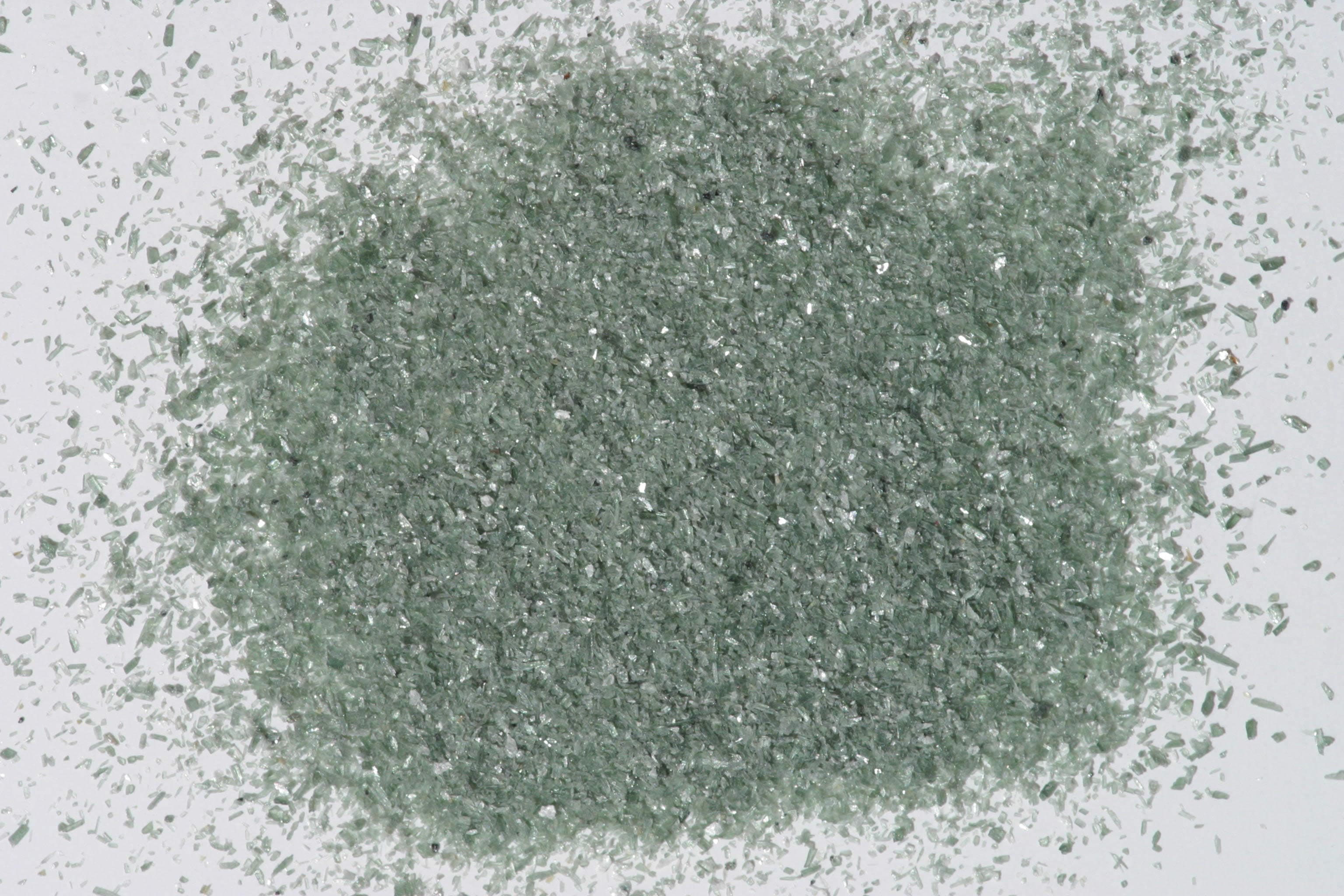
Sphene — FTIR1,801 points · 400–4000 cm⁻¹
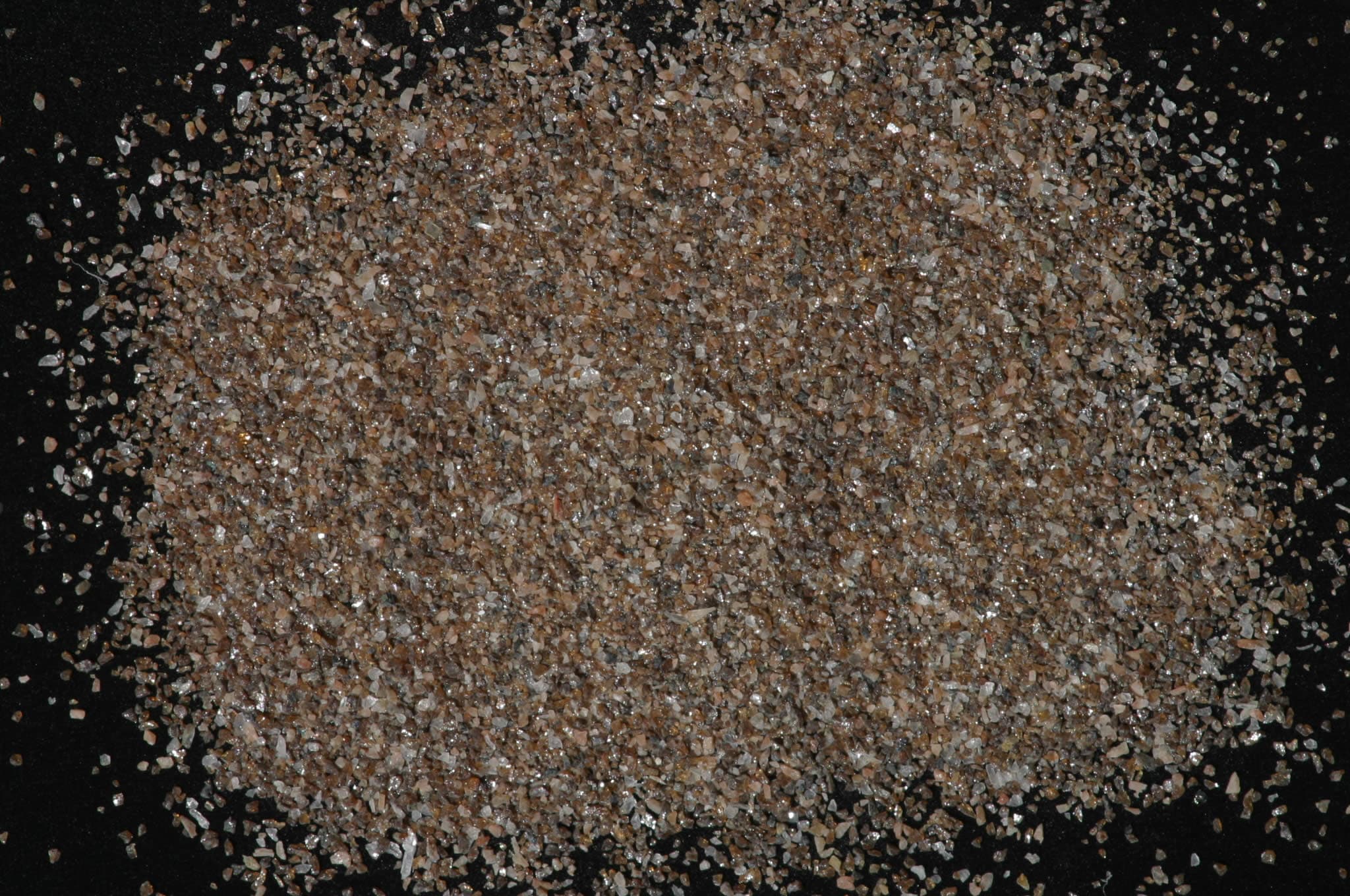
Sample photograph — USGS Spectral Library v7
Spectrum Details
- Modality
- FTIR
- Category
- mineral
- Material Type
- Nesosilicate
- Sample ID
- HS189.3B
- Collection Locality
- Ontario, Canada
- Spectral Purity
- 1b2c3c4_ # HS189.3B # 1= 0.2-3, 2= 1.5-6, 3= 6-25, 4= 20-150 microns
- Composition / XRD
- None # XRF, EPMA, ICP(Trace), WChem
- Sample Description
- "N-16 Sphene 189B--Ontario. CaTiO(SiO4): Sphene is a widespread accessory mineral in igneous and metamorphic rocks. Calcium may be replaced partially by strontium and barium, or by the rare earths and thorium, the higher valencies of the latter being balanced by the entry of trivalent iron and aluminum into the titanium position. The titanium may be partially replaced by Sn, Nb and Ta, with possible compensation of Na replacing Ca. Finally, one O may be replaced by OH or F. This particular sample is a dark reddish brown, apparently due primarily to both the ferric iron and titanium, as described for rutile (see Part III, p. 204, spectrum 0-15A). The presence of about 5 percent opaque magnetite lowers the overall reflectivity of this sample." Sieve interval 74 - 250µm. Hunt, G.R., J.W. Salisbury, and C.J. Lenhoff, 1973, Visible and near-infrared spectra of minerals and rocks: VI. Additional silicates. Modern Geology, v. 4, p. 85-106. IMAGE_OF_SAMPLE:
- XRD Analysis
- 40 kV - 30 mA, 6.5-9.5 keV File: sphen189.out, -.mdi References: Borg and Smith (1969); JCPDS #25-117; WAR-0612; Huebner's reference pattern Found: Titanite, minor quartz, albite, unidentified weak reflections at 7.1, 3.03, 2.90, and 2.71 Angstroms Comment: Titanoite is the preferred name for sphene. The albite is very sodic, but the pattern is not sufficiently strong for determination of the structural state by the method of Wright (1968) J.S.Huebner, J.Pickrell, T. Schaefer,written communication (USGS)
- X Units
- cm⁻¹
- Y Units
- Absorbance
- Data Points
- 1,801
Download
Attribution
USGS Spectral Library Version 7, U.S. Geological Survey
License: Public Domain
DOI: 10.3133/ds1035Analyze in Workbench
Open this spectrum in the SpectralBench workbench for advanced analysis, peak detection, and comparison.
Open Workbench