Staurolite — NIR2,126 points · 4000–12500 cm⁻¹
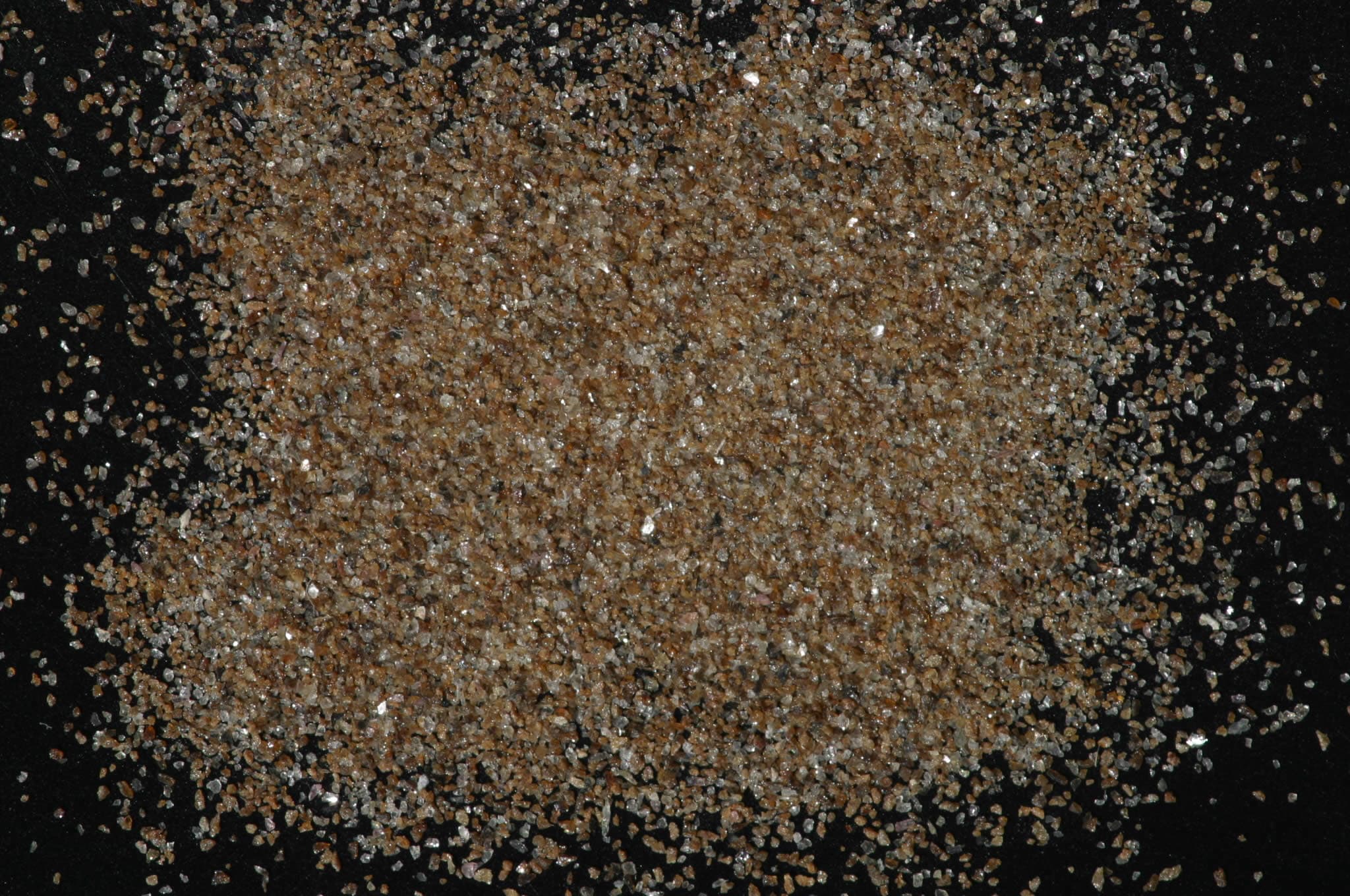
Sample photograph — USGS Spectral Library v7
Spectrum Details
- Modality
- NIR
- Category
- mineral
- Material Type
- Nesosilicate
- Sample ID
- HS188.1B, HS188.2B, HS188.3B, HS188.4B
- Collection Locality
- Fannin County, Georgia
- Spectral Purity
- 1b2_3_4_ # HS188.1B # 1= 0.2-3, 2= 1.5-6, 3= 6-25, 4= 20-150 microns SPECTRAL_PURITY: 1b2_3_4_ # HS188.2B # 1= 0.2-3, 2= 1.5-6, 3= 6-25, 4= 20-150 microns SPECTRAL_PURITY: 1c2c3d4_ # HS188.3B # 1= 0.2-3, 2= 1.5-6, 3= 6-25, 4= 20-150 microns SPECTRAL_PURITY: 1c2_3_4_ # HS188.4B # 1= 0.2-3, 2= 1.5-6, 3= 6-25, 4= 20-150 microns
- Composition / XRD
- None # XRF, EPMA, ICP(Trace), WChem COMPOSITION_TRACE:
- Sample Description
- N-14 Staurolite 188B--Fannin Co., Georgia. (Fe^2+, Mg)2(Al, Fe^3+)9O6 (SiO4)4(O, OH)2: Staurolite, like kyanite and sillimanite is a typical mineral found in medium grade metamorphosed argillaceous rocks. It is produced at a lower temperature-pressure than is kyanite. This spectrum shows strong general absorption to both long and short wavelengths which produces an apparent reflectivity maximum near 1.05 µ. The fall off to longer wavelengths must be due to generalized hydroxyl and water absorptions and is quite similar in appearance to the spectrum of diaspore (see Part III, p. 200, spectrum (-6). The fall off in the visible must be due to absorptions by ferrous and ferric iron. Hunt, G.R., J.W. Salisbury, and C.J. Lenhoff, 1973, Visible and near-infrared spectra of minerals and rocks: VI. Additional silicates. Modern Geology, v. 4, p. 85-106. Grain size fractions are indicated by the extension after the sample number: .1B = IMAGE_OF_SAMPLE:
- XRD Analysis
- 40 kV - 30 mA, 7.3-9.5 keV File: staur188.out, -.mdi References: JCPDS # 41-1484; Huebner's reference patterns Found: quartz, staurolite, K-mica Comment: All components appear well crystallized and in significant representation with quartz, staurolite, mica. All reflections are accounted for. The mica basal reflection at 10 Angstroms appears to be a doublet but next 4.95 does not. J.S.Huebner, J. Pickrell, T. Schaefer, written communication(1994 USGS)
- X Units
- cm⁻¹
- Y Units
- Absorbance
- Data Points
- 2,126
Download
Attribution
USGS Spectral Library Version 7, U.S. Geological Survey
License: Public Domain
DOI: 10.3133/ds1035Analyze in Workbench
Open this spectrum in the SpectralBench workbench for advanced analysis, peak detection, and comparison.
Open Workbench