Tremolite — NIR2,126 points · 4000–12500 cm⁻¹
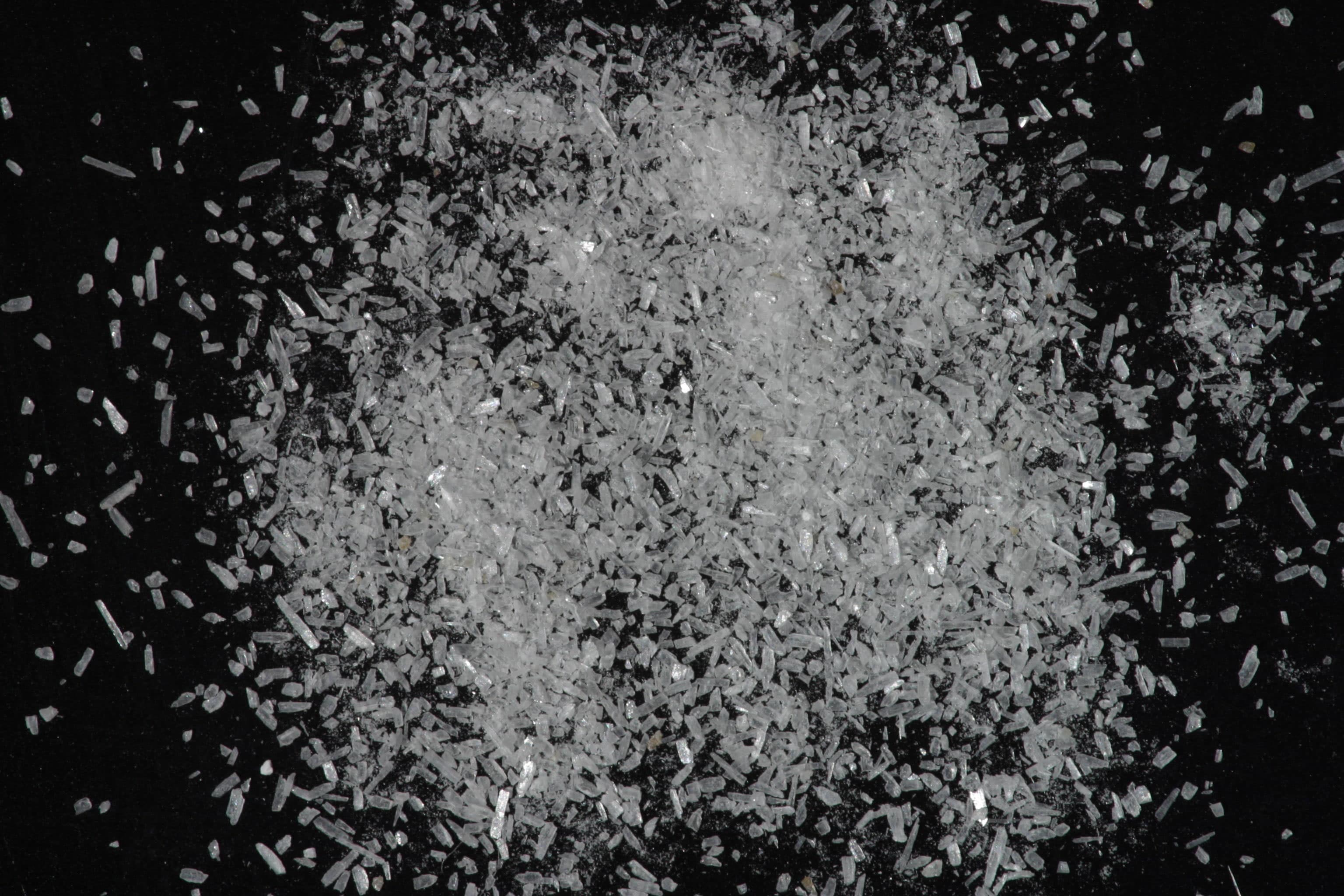
Sample photograph — USGS Spectral Library v7
Spectrum Details
- Modality
- NIR
- Category
- mineral
- Material Type
- Inosilicate
- Sample ID
- HS18.1B, HS18.2B, HS18.3, HS18.3B, HS18.4B
- Collection Locality
- St. Lawrence County, New York
- Spectral Purity
- 1c2_3_4_ # HS18.1B # 1= 0.2-3, 2= 1.5-6, 3= 6-25, 4= 20-150 microns SPECTRAL_PURITY: 1c2_3_4_ # HS18.2B # 1= 0.2-3, 2= 1.5-6, 3= 6-25, 4= 20-150 microns SPECTRAL_PURITY: 1c2_3_4_ # HS18.3 # 1= 0.2-3, 2= 1.5-6, 3= 6-25, 4= 20-150 microns SPECTRAL_PURITY: 1c2c3c4c # HS18.3B # 1= 0.2-3, 2= 1.5-6, 3= 6-25, 4= 20-150 microns SPECTRAL_PURITY: 1c2_3_4_ # HS18.4B # 1= 0.2-3, 2= 1.5-6, 3= 6-25, 4= 20-150 microns
- Composition / XRD
- EPMA # XRF, EPMA, ICP(Trace), WChem
- Sample Description
- Forms series with Actinolite and Ferroactinolite. "S-1A. Amphibole, variety Tremolite. St. Lawrence Co., N.Y. (18B). This sample has a fairly prominent broad band near 1µ, indicating that it contains some ferrous ion. It displays a very sharp band at 1.4µ, and less sharp bands between 2.0 and 2.5 µ due to the overtone and combination tones of the OH stretch, respectively. In particular, the bands at 2.2 and 2.3 µ are due to combination tones of the OH stretch with lattice modes. The weak band at 1.9µ is probably due to a small amount of molecular H2O in the sample." Hunt, G.R., J.W. Salisbury, 1970, Visible and near-infrared spectra of minerals and rocks: I. Silicate minerals. Modern Geology, v. 1, p. 283-300. Grain size fractions are indicated by the extension after the sample number: .1B = IMAGE_OF_SAMPLE:
- XRD Analysis
- Tremolite + medium amount quartz + small amount of mica + large amount of others; M: ~1% magnetite, no other minerals visible (Norma Vergo)
- X Units
- cm⁻¹
- Y Units
- Absorbance
- Data Points
- 2,126
Download
Attribution
USGS Spectral Library Version 7, U.S. Geological Survey
License: Public Domain
DOI: 10.3133/ds1035Analyze in Workbench
Open this spectrum in the SpectralBench workbench for advanced analysis, peak detection, and comparison.
Open Workbench