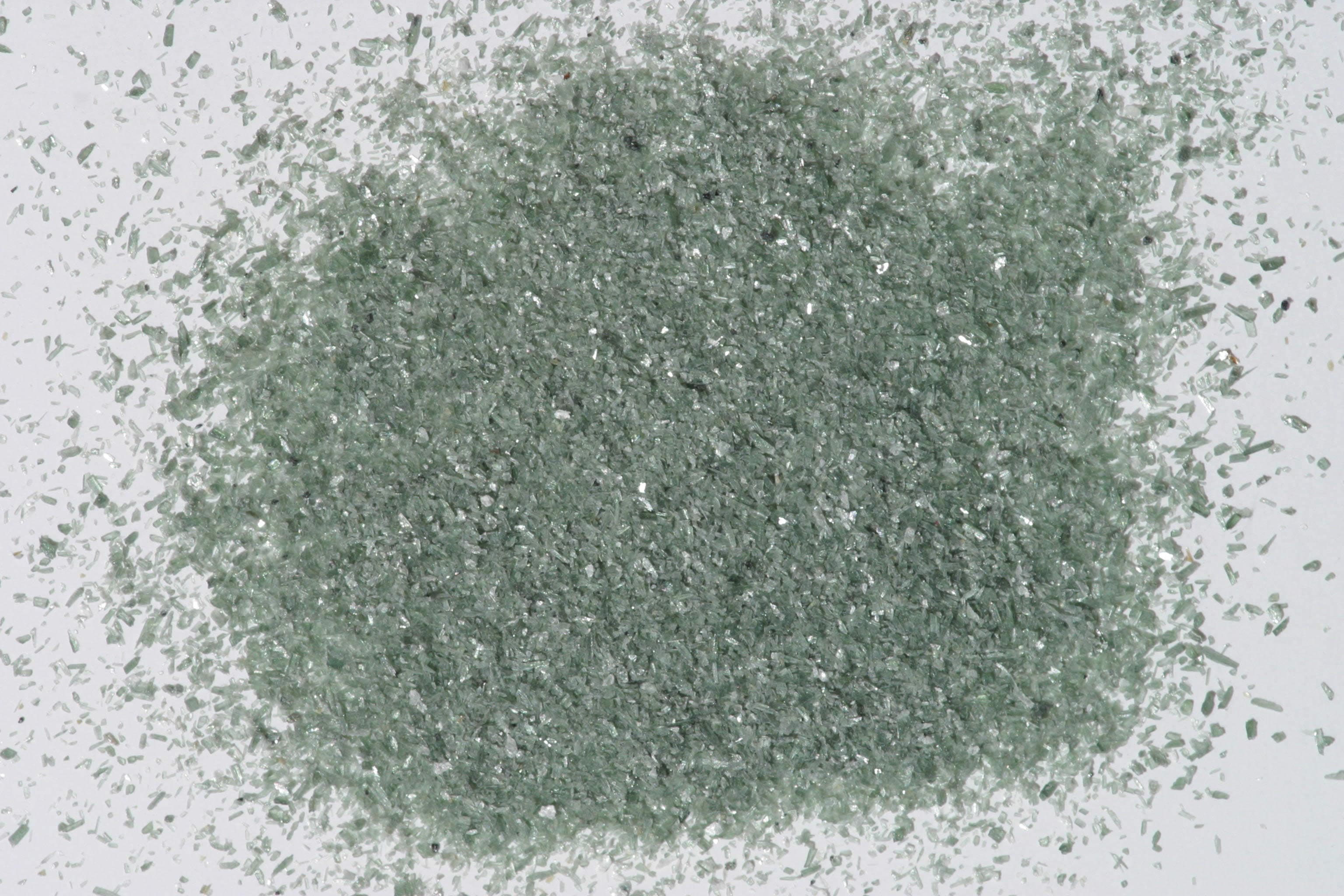
Uralite — FTIR1,801 points · 400–4000 cm⁻¹
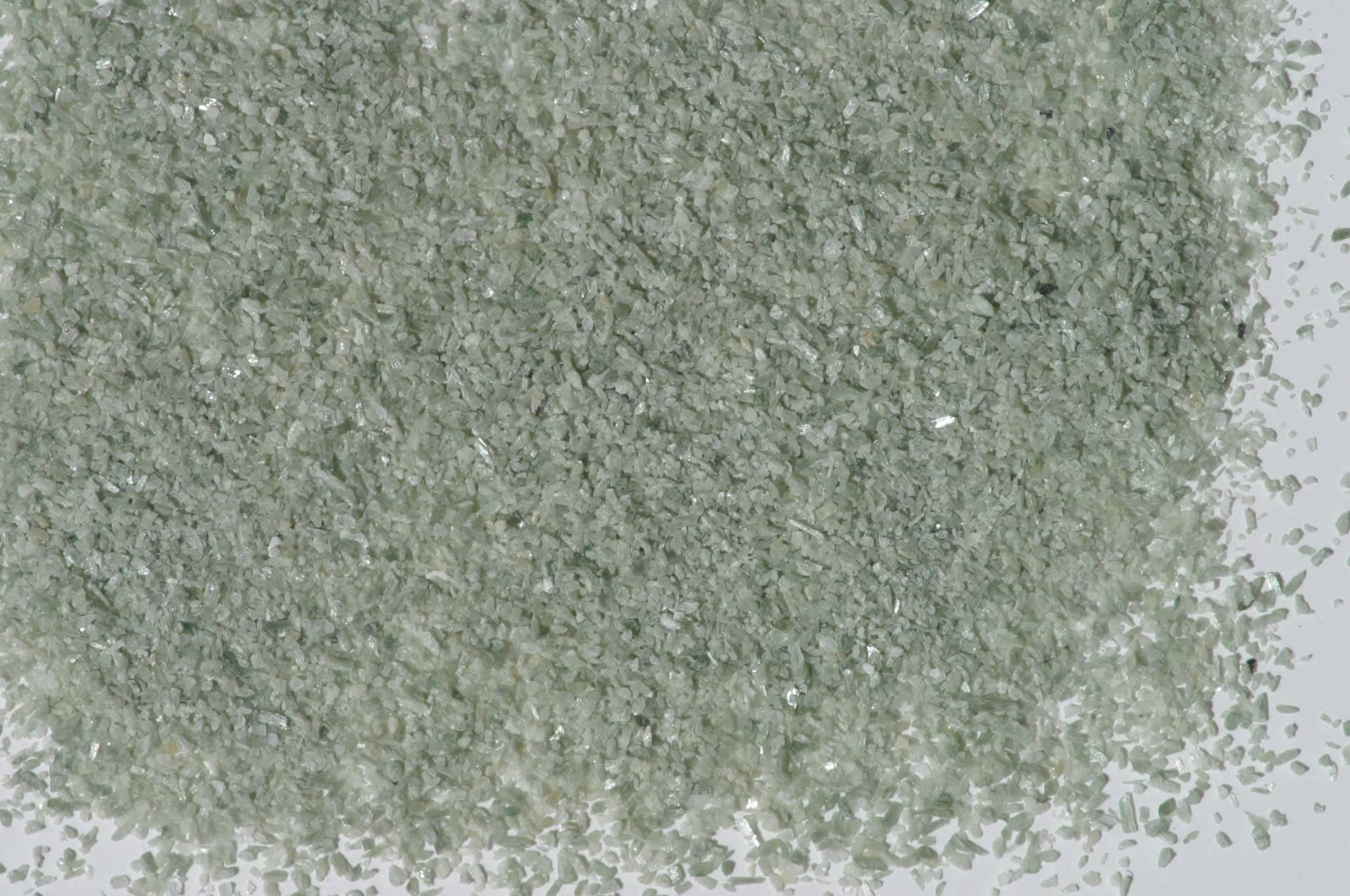
Sample photograph — USGS Spectral Library v7
Spectrum Details
- Modality
- FTIR
- Category
- mineral
- Material Type
- Inosilicate
- Sample ID
- HS345.1B, HS345.2B, HS345.3B, HS345.4B, HS345.6
- Collection Locality
- Calumet, Colorado
- Spectral Purity
- 1b2_3_4_ # HS345.1B # 1= 0.2-3, 2= 1.5-6, 3= 6-25, 4= 20-150 microns SPECTRAL_PURITY: 1b2_3_4_ # HS345.2B # 1= 0.2-3, 2= 1.5-6, 3= 6-25, 4= 20-150 microns SPECTRAL_PURITY: 1b2c3c4u # HS345.3B # 1= 0.2-3, 2= 1.5-6, 3= 6-25, 4= 20-150 microns SPECTRAL_PURITY: 1b2_3_4_ # HS345.4B # 1= 0.2-3, 2= 1.5-6, 3= 6-25, 4= 20-150 microns SPECTRAL_PURITY: 1b2_3_4_ # HS345.6 # 1= 0.2-3, 2= 1.5-6, 3= 6-25, 4= 20-150 microns
- Composition / XRD
- None # XRF, EPMA, ICP(Trace), WChem COMPOSITION_TRACE:
- Sample Description
- I-15 Uralite 345B--Calumet, Colo. Ca2(Mg,Fe^2+)5(Si8O22)(OH,F)2: This is a hornblende formed by alteration of pyroxenes. It is generally actinolitic in composition, but often contains aluminum (Deer and others, 1963). Its spectrum shows a doubled iron feature near 0.75 and 1.0µ, the former due to Fe^3+ substituting for Al, the latter due to Fe^2+ substituting for Mg. The 1.4µ hydroxyl feature is considerably weaker than the 2.32µ and 2.38µ hydroxyl bands. The 1.9µ band indicates a slight amount of included water." Sieve interval 74 - 250µm. Hunt, G.R., J.W. Salisbury, and C.J. Lenhoff, 1973, Visible and near-infrared spectra of minerals and rocks: VI. Additional silicates. Modern Geology, v. 4, p. 85-106. IMAGE_OF_SAMPLE:
- XRD Analysis
- Amphibole - major (hornblende?) Clinopyroxene - major (augite?) Unidentifiable residual Note: Uralite is described as an amphibole psuedomorphous after pyroxene. Konnert, Judith and Marta Flohr, 1992, unpublished data, USGS Reston, VA.
- X Units
- cm⁻¹
- Y Units
- Absorbance
- Data Points
- 1,801
Download
Attribution
USGS Spectral Library Version 7, U.S. Geological Survey
License: Public Domain
DOI: 10.3133/ds1035Analyze in Workbench
Open this spectrum in the SpectralBench workbench for advanced analysis, peak detection, and comparison.
Open Workbench