Vermiculite at1UI expand Ore — NIR2,126 points · 4000–12500 cm⁻¹
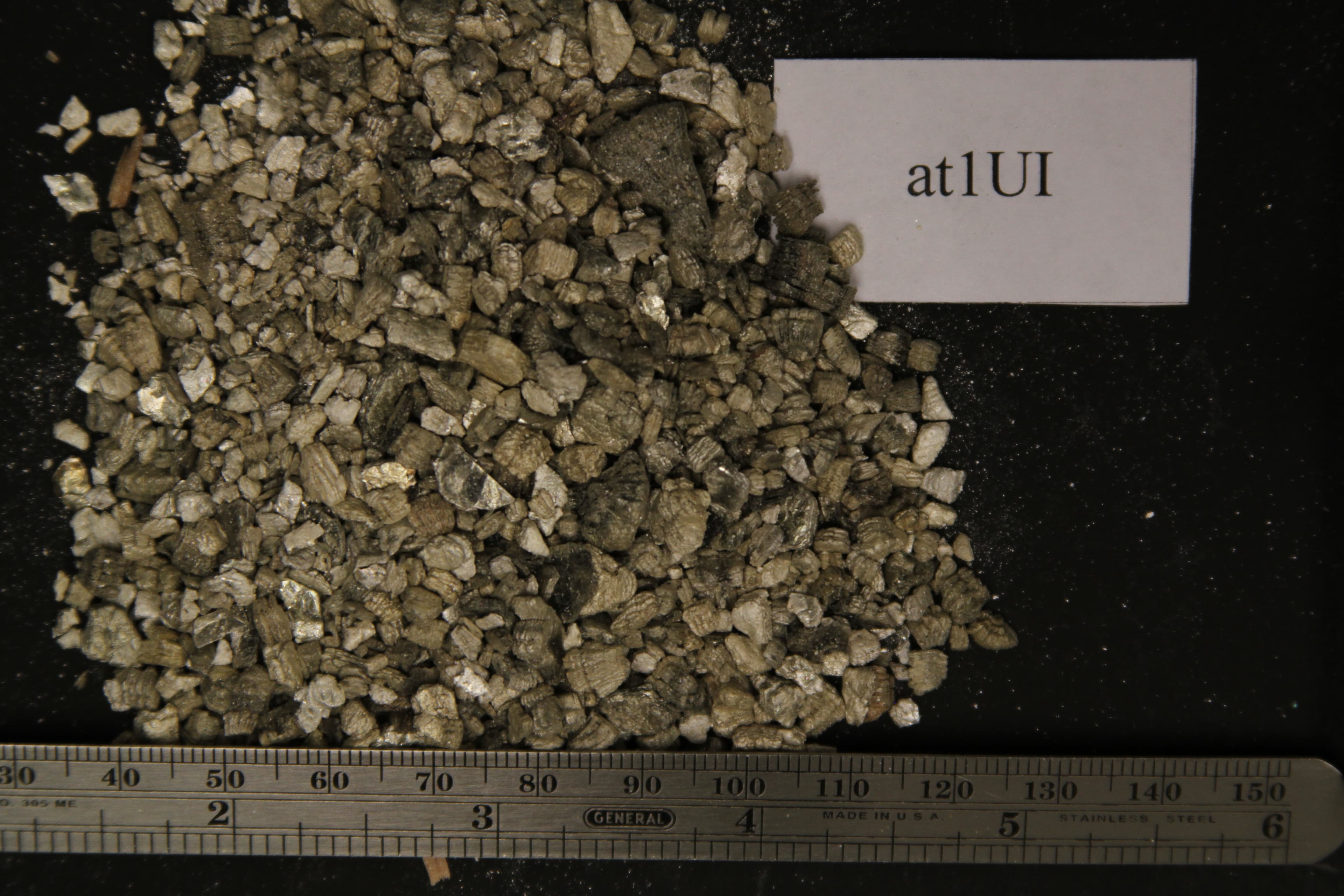
Sample photograph — USGS Spectral Library v7
Spectrum Details
- Modality
- NIR
- Category
- man-made
- Material Type
- Expanded Phyllosilicates
- Sample ID
- at1UI
- Collection Locality
- This sample is from the attic of a home in Moscow, Idaho, and was provided by Mickey Gunter (University of Idaho) in 2006.
- Spectral Purity
- 1b2_3_4_ # 1= 0.2-3, 2= 1.5-6, 3= 6-25, 4= 20-150 microns
- Composition / XRD
- None # XRF, EPMA, ICP(Trace), WChem
- Sample Description
- The sample has a mottled golden color with a few dark grains and grains range in size from 2-15 mm (Fig. at1UI.photo.1). A modified Cincinnati floation method was carried out on this sample. The sink fraction consists of mica flakes and small elongate amphibole bundles, the later of which were mounted on a stub for SEM examination. The abundance of elongate amphibole bundles in the sink fraction indicates up to a few weight percent amphibole particles in this sample. See text for details of modified Cincinnati Method. The sample has a spectral signature similar to that of expanded vermiculite ore from Libby, Montana, USA. Original spectrum published in: IMAGE_OF_SAMPLE:
- XRD Analysis
- Rietveld refinement XRD analysis (limited quantities of sample and no internal standard) of the Cincinnati Method sink fraction indicates the presence of major microcline and quartz, minor albite, calcite, phlogopite (Fig. at1UI.XRD.2). Elongate amphibole bundles were removed from the sink fraction for SEM examination prior to XRD analyses.
- X Units
- cm⁻¹
- Y Units
- Absorbance
- Data Points
- 2,126
Download
Attribution
USGS Spectral Library Version 7, U.S. Geological Survey
License: Public Domain
DOI: 10.3133/ds1035Analyze in Workbench
Open this spectrum in the SpectralBench workbench for advanced analysis, peak detection, and comparison.
Open Workbench