Vesuvianite — FTIR1,801 points · 400–4000 cm⁻¹
Spectrum Details
- Modality
- FTIR
- Category
- mineral
- Material Type
- Cyclosilicate
- Sample ID
- HS446.1B, HS446.2B, HS446.3B, HS446.4B, HS446.6
- Collection Locality
- Maine
- Spectral Purity
- 1a2_3_4_ # HS446.1B # 1= 0.2-3, 2= 1.5-6, 3= 6-25, 4= 20-150 microns SPECTRAL_PURITY: 1a2_3_4_ # HS446.2B # 1= 0.2-3, 2= 1.5-6, 3= 6-25, 4= 20-150 microns SPECTRAL_PURITY: 1a2a3a4a # HS446.3B # 1= 0.2-3, 2= 1.5-6, 3= 6-25, 4= 20-150 microns SPECTRAL_PURITY: 1a2_3_4_ # HS446.4B # 1= 0.2-3, 2= 1.5-6, 3= 6-25, 4= 20-150 microns SPECTRAL_PURITY: 1a2_3_4_ # HS446.6 # 1= 0.2-3, 2= 1.5-6, 3= 6-25, 4= 20-150 microns
- Composition / XRD
- None # XRF, EPMA, ICP(Trace), WChem COMPOSITION_TRACE:
- Sample Description
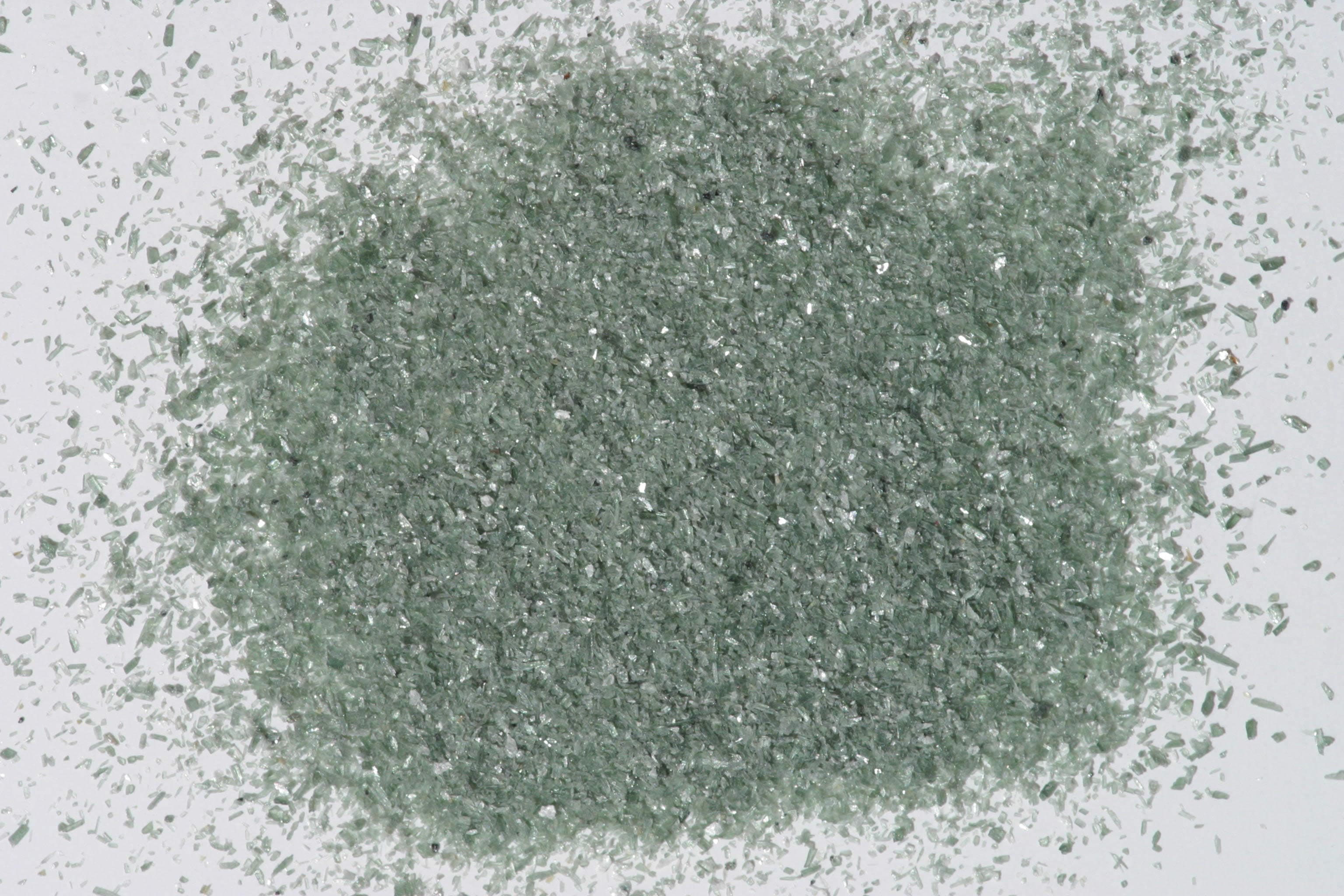
- "S-6 Idocrase 446B--Maine. Ca10(MgFe)2Al4- (SiO4)5(Si2O7)2(OH)4: Idocrase is found in crystalline limestones as a result of contact metamorphism. The spectrum displays a weak but well resolved ferrous iron band at 0.936 µ, a weak ferric ion band near 0.75 µ, and the typical associated fall off in reflectivity to the blue. Very well resolved hydroxyl doubled features occur near 1.4 and 1.44 µ, and the weak 1.9 µ feature indicates some H2O. Combination OH bands occur near 2.2 and 2.37 µ. Note that these hydroxyl and water bands are located at their usual positions, unlike those displayed by other members of the epidote group. It is interesting that some authors (eg. Deer and others, 1963) do not include idocrase as a member of the epidote group, and the anomalous positions of its hydroxyl and water bands support this view." Hunt, G.R., J.W. Salisbury, and C.J. Lenhoff, 1973, Visible and near-infrared spectra of minerals and rocks: VI. Additional silicates. Modern Geology, v. 4, p. 85-106. Grain size fractions are indicated by the extension after the sample number: .1B = IMAGE_OF_SAMPLE: NO PHOTO
- XRD Analysis
- 40 kV - 30 mA, 6.5-9.5 keV File: idoc446.out, -.mdi (smear mount of coarse material on quartz plate) idoc446b.mdi (smear mount of finely ground material on quartz plate) References: Borg and Smith (1969); JCPDS #38-437 Found: idocrase Comment: Idocrase is well crystallized and appears to be the only phase. The pattern of coarse material shows anomalous intensities and some d-spacings of the smaller peaks are significantly shifted from the reference pattern. The pattern of fine material was refined (without internal standard) to a=15.603(4) and c=11.766(4) ; despite much peak overlap all observed reflections could be indexed using the calculated list of permitted d-spacings. J.S.Huebner, J. Pickrell, T.Schaefer, written communication (1994 USGS)
- X Units
- cm⁻¹
- Y Units
- Absorbance
- Data Points
- 1,801
Download
Attribution
USGS Spectral Library Version 7, U.S. Geological Survey
License: Public Domain
DOI: 10.3133/ds1035Analyze in Workbench
Open this spectrum in the SpectralBench workbench for advanced analysis, peak detection, and comparison.
Open Workbench