Buddingtonite — NIR2,126 points · 4000–12500 cm⁻¹
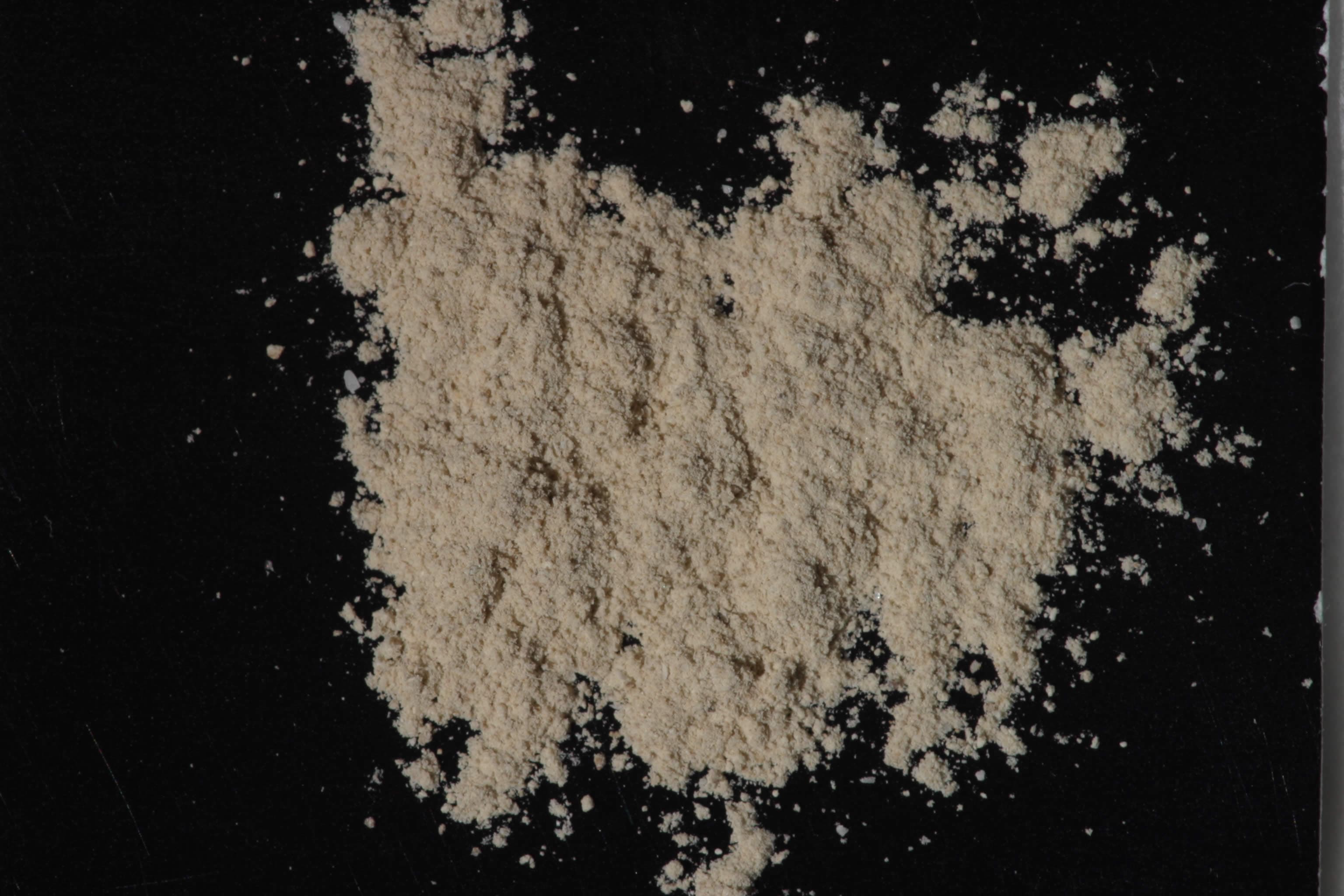
Sample photograph — USGS Spectral Library v7
Spectrum Details
- Modality
- NIR
- Category
- mineral
- Material Type
- Tectosilicate
- Sample ID
- GDS85 (D-206)
- Collection Locality
- Sulphur Bank, California
- Spectral Purity
- 1b2_3_4_ # 1= 0.2-3, 2= 1.5-6, 3= 6-25, 4= 20-150 microns
- Composition / XRD
- None # XRF, EPMA, ICP(Trace), WChem
- Sample Description
- Comment: there are weak bands at 1.4 and 1.55 µm. The 1.55 might be due to alunite. If so, the buddingtonite feature is more than 10 times stronger, so the buddingtonite 2.1-µm feature is probably spectrally pure. Similar arguments for the 1.4 band. If these features are due to buddingtonite itself, then it is even more spectrally pure. Roger N. Clark IMAGE_OF_SAMPLE:
- XRD Analysis
- Quartz - major component Buddingtonite - major component No apparent alunite Konnert, Judith and Marta Flohr, 1992, unpublished data, USGS Reston, VA.
- X Units
- cm⁻¹
- Y Units
- Absorbance
- Data Points
- 2,126
Download
Attribution
USGS Spectral Library Version 7, U.S. Geological Survey
License: Public Domain
DOI: 10.3133/ds1035Match Your Spectrum
Have an unknown? Upload it and match against Buddingtonite and thousands more references with HQI scoring.
Identify My Sample